Hudson, Renee Author
Biography not available.

Browse all FOLKLORE books
Browse all GARDENS books
Browse all GRAPHIC NOVELS books
Browse all HISTORY - MEDIEVAL books
Browse all HUMOUR books
Browse all Juvenile Fiction : Biographical - Other books
Browse all Juvenile Fiction : Historical - Other books
Browse all Juvenile Fiction : Legends, Myths, & Fables - Other books
Browse all Juvenile Fiction : People & Places - Other books
Browse all Juvenile Fiction : People & Places - United States - Other books
Browse all Juvenile Fiction : Religious - Other books
Browse all Juvenile Nonfiction : History - Other books
Browse all Juvenile Nonfiction : Mathematics - Advanced books
Browse all Juvenile Nonfiction : People & Places - Other books
Browse all Juvenile Nonfiction : People & Places - United States - Othe books
Browse all LITERARY STUDIES books
Browse all LONDON books
Browse all Medical : Nursing - Mental Health books
Browse all MIND books
Browse all MUSEOLOGY books
Browse all NON-CLASSIFIABLE books
Browse all NONLINEAR SCIENCE books
Browse all POPULAR SCIENCE books
Browse all RELIGIOUS STUDIES books
Browse all SPIRIT books
Browse all SPORT books
Browse all TRAVEL WRITING books
 Out of Stock
Hardback · ISBN 9781531507183
Inclusive of GST and other taxes
Arriving at your doorstep in 10-15 days
Our logisitcs team will make sure everyitem is delivered safely
| ISBN | 9781531507183 |
|---|---|
| Publisher | Fordham University Press |
| Publication date | May 2024 |
| Language | English |
| MRP | £74.99 GBP |
| Page count | 308 |
| Item weight | 131 g |
A necessary reconceptualization of Latinx identity, literature, and politics
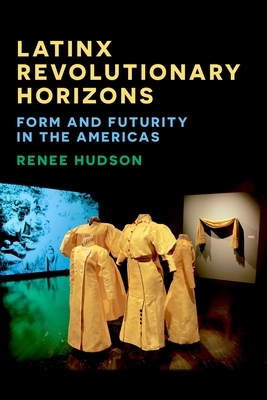
In Latinx Revolutionary Horizons, Renee Hudson theorizes a liberatory latinidad that is not yet here and conceptualizes a hemispheric project in which contemporary Latinx authors return to earlier moments of revolution. Rather than viewing Latinx as solely a category of identification, she argues for an expansive, historicized sense of the term that illuminates its political potential.
Claiming the "x" in Latinx as marking the suspension and tension between how Latin American descended people identify and the future politics the "x" points us toward, Hudson contends that latinidad can signal a politics grounded in shared struggles and histories rather than merely a mode of identification. In this way, Latinx Revolutionary Horizons reads against current calls for cancelling latinidad based on its presumed anti-Black and anti-Indigenous framework. Instead, she examines the not-yet-here of latinidad to investigate the connection between the revolutionary history of the Americas and the creation of new genres in the hemisphere, from conversion narratives and dictator novels to neoslave narratives and testimonios.
By comparing colonialisms, she charts a revolutionary genealogy across a range of movements such as the Mexican Revolution, the Filipino People Power Revolution, resistance to Trujillo in the Dominican Republic, and the Cuban Revolution. In pairing nineteenth-century authors along-side contemporary Latinx ones, Hudson examines a longer genealogy of Latinx resistance while expanding its literary canon, from the works of José Rizal and Martin Delany to those of Julia Alvarez, Jessica Hagedorn, and Leslie Marmon Silko. In imagining a truly transnational latinidad, Latinx Revolutionary Horizons thus rewrites our understanding of the nationalist formations that continue to characterize Latinx Studies.
Log in to write a review for this book.
No reviews yet. Be the first to share your opinion.
Biography not available.