Hatfield, Charles Author
Biography not available.

Browse all FOLKLORE books
Browse all GARDENS books
Browse all GRAPHIC NOVELS books
Browse all HISTORY - MEDIEVAL books
Browse all HUMOUR books
Browse all Juvenile Fiction : Biographical - Other books
Browse all Juvenile Fiction : Historical - Other books
Browse all Juvenile Fiction : Legends, Myths, & Fables - Other books
Browse all Juvenile Fiction : People & Places - Other books
Browse all Juvenile Fiction : People & Places - United States - Other books
Browse all Juvenile Fiction : Religious - Other books
Browse all Juvenile Nonfiction : History - Other books
Browse all Juvenile Nonfiction : Mathematics - Advanced books
Browse all Juvenile Nonfiction : People & Places - Other books
Browse all Juvenile Nonfiction : People & Places - United States - Othe books
Browse all LITERARY STUDIES books
Browse all LONDON books
Browse all Medical : Nursing - Mental Health books
Browse all MIND books
Browse all MUSEOLOGY books
Browse all NON-CLASSIFIABLE books
Browse all NONLINEAR SCIENCE books
Browse all POPULAR SCIENCE books
Browse all RELIGIOUS STUDIES books
Browse all SPIRIT books
Browse all SPORT books
Browse all TRAVEL WRITING books
 Out of Stock
Paperback · ISBN 9781578067190
Inclusive of GST and other taxes
Arriving at your doorstep in 10-15 days
Our logisitcs team will make sure everyitem is delivered safely
| ISBN | 9781578067190 |
|---|---|
| Publisher | University Press of Mississippi |
| Publication date | August 2005 |
| Language | English |
| MRP | £22.99 GBP |
| Page count | 200 |
| Item weight | 105 g |
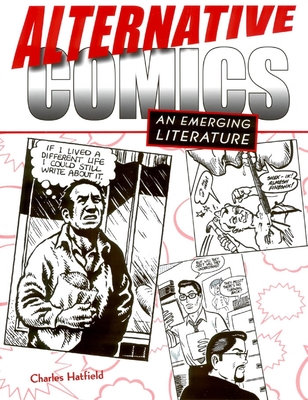
In Alternative Comics: An Emerging Literature, Charles Hatfield establishes the parameters of alternative comics by closely examining long-form comics, in particular the graphic novel. He argues that these are fundamentally a literary form and offers an extensive critical study of them both as a literary genre and as a cultural phenomenon. Combining sharp-eyed readings and illustrations from particular texts with a larger understanding of the comics as an art form, this book discusses the development of specific genres, such as autobiography and history.
Alternative Comics analyzes such seminal works as Spiegelman's Maus, Gilbert Hernandez's Palomar: The Heartbreak Soup Stories, and Justin Green's Binky Brown Meets the Holy Virgin Mary. Hatfield explores how issues outside of cartooning-the marketplace, production demands, work schedules-can affect the final work. Using Hernandez's Palomar as an example, he shows how serialization may determine the way a cartoonist structures a narrative. In a close look at Maus, Binky Brown, and Harvey Pekar's American Splendor, Hatfield teases out the complications of creating biography and autobiography in a substantially visual medium, and shows how creators approach these issues in radically different ways.
Log in to write a review for this book.
No reviews yet. Be the first to share your opinion.
Biography not available.