Neusner, Jacob Author
Biography not available.

Browse all FOLKLORE books
Browse all GARDENS books
Browse all GRAPHIC NOVELS books
Browse all HISTORY - MEDIEVAL books
Browse all HUMOUR books
Browse all Juvenile Fiction : Biographical - Other books
Browse all Juvenile Fiction : Historical - Other books
Browse all Juvenile Fiction : Legends, Myths, & Fables - Other books
Browse all Juvenile Fiction : People & Places - Other books
Browse all Juvenile Fiction : People & Places - United States - Other books
Browse all Juvenile Fiction : Religious - Other books
Browse all Juvenile Nonfiction : History - Other books
Browse all Juvenile Nonfiction : Mathematics - Advanced books
Browse all Juvenile Nonfiction : People & Places - Other books
Browse all Juvenile Nonfiction : People & Places - United States - Othe books
Browse all LITERARY STUDIES books
Browse all LONDON books
Browse all Medical : Nursing - Mental Health books
Browse all MIND books
Browse all MUSEOLOGY books
Browse all NON-CLASSIFIABLE books
Browse all NONLINEAR SCIENCE books
Browse all POPULAR SCIENCE books
Browse all RELIGIOUS STUDIES books
Browse all SPIRIT books
Browse all SPORT books
Browse all TRAVEL WRITING books
 Out of Stock
Paperback · ISBN 9781592447244
Inclusive of GST and other taxes
Arriving at your doorstep in 10-15 days
Our logisitcs team will make sure everyitem is delivered safely
| ISBN | 9781592447244 |
|---|---|
| Publisher | Wipf and Stock |
| Publication date | June 2004 |
| Language | English |
| MRP | £31.00 GBP |
| Page count | 322 |
| Item weight | 96 g |
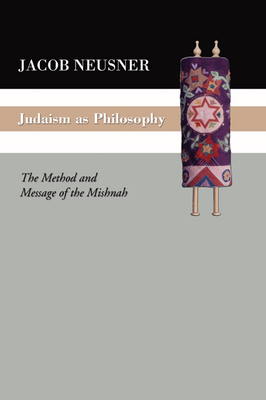
The Mishnah is the first canonical writing of Judaism after the Hebrew Scriptures of ancient Israel (the Old Testament) and the foundation of the two Talmuds and of all Judaism thereafter. According to eminent religion scholar Jacob Neusner, the key to understanding the Mishnah is to read it as philosophy, in accord with the generally accepted understanding of philosophy in its time and place. In 'Judaism as Philosophy', Neusner studies a large sample of evidence, meticulously translated and carefully explained, and identifies the philosophical side of the Mishnah's system, method, and message alike. The philosophical tradition in which the Mishnah takes its place, Neusner explains, utilizes the Aristotelian method of hierarchical classification to demonstrate the proposition (important to Middle Platonism and profoundly expressed by Plotinus) that many things really form a single thing: many species, a single genus; many genera, an encompassing, well-crafted and cogent whole. Through the systematic and orderly hierarchical classification of the things of nature, the framers of the Mishnah illustrate the ultimate unity of all being emanating from the One on high. Arguing that the document's writers chose a legal form for a philosophical proposition, this book completely changes a centuries-old way of reading the Mishnah. Judaism emerges as a sustained demonstration of the unity of all being under one God.
Log in to write a review for this book.
No reviews yet. Be the first to share your opinion.
Biography not available.