Garlington, Don Author
Biography not available.

Browse all FOLKLORE books
Browse all GARDENS books
Browse all GRAPHIC NOVELS books
Browse all HISTORY - MEDIEVAL books
Browse all HUMOUR books
Browse all Juvenile Fiction : Biographical - Other books
Browse all Juvenile Fiction : Historical - Other books
Browse all Juvenile Fiction : Legends, Myths, & Fables - Other books
Browse all Juvenile Fiction : People & Places - Other books
Browse all Juvenile Fiction : People & Places - United States - Other books
Browse all Juvenile Fiction : Religious - Other books
Browse all Juvenile Nonfiction : History - Other books
Browse all Juvenile Nonfiction : Mathematics - Advanced books
Browse all Juvenile Nonfiction : People & Places - Other books
Browse all Juvenile Nonfiction : People & Places - United States - Othe books
Browse all LITERARY STUDIES books
Browse all LONDON books
Browse all Medical : Nursing - Mental Health books
Browse all MIND books
Browse all MUSEOLOGY books
Browse all NON-CLASSIFIABLE books
Browse all NONLINEAR SCIENCE books
Browse all POPULAR SCIENCE books
Browse all RELIGIOUS STUDIES books
Browse all SPIRIT books
Browse all SPORT books
Browse all TRAVEL WRITING books
 Out of Stock
Paperback · ISBN 9781606088258
Inclusive of GST and other taxes
Arriving at your doorstep in 10-15 days
Our logisitcs team will make sure everyitem is delivered safely
| ISBN | 9781606088258 |
|---|---|
| Publisher | Wipf and Stock |
| Publication date | June 2009 |
| Language | English |
| MRP | £24.00 GBP |
| Page count | 214 |
| Item weight | 65 g |
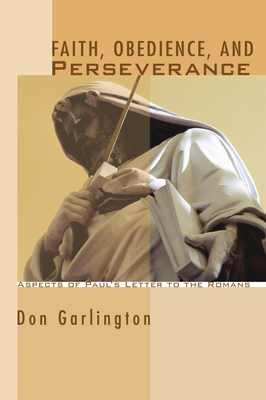
Intended as sequel to the author's early study 'The Obedience of Faith': A Pauline Phrase in Historical Context, this book explores the interlocking themes of faith, obedience, and perseverance in the letter to the Romans. Don Garlington argues that Paul's phrase ""the obedience of faith"" is designed to say two things at the same time, that is, an obedience which consists in faith and which is the outgrowth of faith's commitment to Jesus Christ. ""The obedience of faith"" thus articulates both the inception of Christian existence and its continuation in the perseverance of the believer. The author reflects on Romans 2:22's allegation of disobedience (""sacrilege"") on the part of Israel. Since Paul's conception of (faith's) obedience stands in stark relief to the (unbelieving) disobedience of his Jewish contemporaries, it is only against the backdrop of his indictment of Israel that aspects of his teaching emerge with tolerable clarity. Garlington also examines Romans 2:13: only ""the doers of the law"" will be justified in eschatological judgment. Thus, there is in Paul's theology the idea of a future justification of the people of God, which forms an analogue to their present justification. And it is none other than ""the obedience of faith"" which provides the link between the two moments of justification. Romans 5 is focused on its portrayal of Christ as the obedient last Adam, who ensures ""the obedience of faith"" of his people. An exegesis of Romans 7:14-25 approaches ""the obedience of faith"" from the angle of the Christian's experience of the onslaught of the powers of this ""present evil age"". The ideals of ""the age to come"", as set out before, are seen to be tempered by the realism of this period of overlapping aeons. Finally the author reflects on the theological and practical significance of the exegetical materials, including a discussion of ""justification"" and ""sanctification"" in Christian thought.
Log in to write a review for this book.
No reviews yet. Be the first to share your opinion.
Biography not available.