Sarno, Una McGinley Author
Biography not available.

Browse all FOLKLORE books
Browse all GARDENS books
Browse all GRAPHIC NOVELS books
Browse all HISTORY - MEDIEVAL books
Browse all HUMOUR books
Browse all Juvenile Fiction : Biographical - Other books
Browse all Juvenile Fiction : Historical - Other books
Browse all Juvenile Fiction : Legends, Myths, & Fables - Other books
Browse all Juvenile Fiction : People & Places - Other books
Browse all Juvenile Fiction : People & Places - United States - Other books
Browse all Juvenile Fiction : Religious - Other books
Browse all Juvenile Nonfiction : History - Other books
Browse all Juvenile Nonfiction : Mathematics - Advanced books
Browse all Juvenile Nonfiction : People & Places - Other books
Browse all Juvenile Nonfiction : People & Places - United States - Othe books
Browse all LITERARY STUDIES books
Browse all LONDON books
Browse all Medical : Nursing - Mental Health books
Browse all MIND books
Browse all MUSEOLOGY books
Browse all NON-CLASSIFIABLE books
Browse all NONLINEAR SCIENCE books
Browse all POPULAR SCIENCE books
Browse all RELIGIOUS STUDIES books
Browse all SPIRIT books
Browse all SPORT books
Browse all TRAVEL WRITING books
 Out of Stock
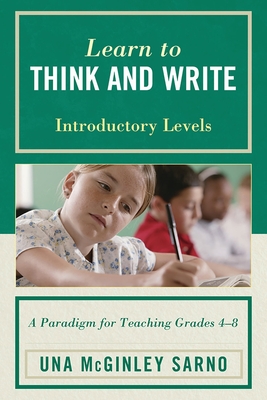
LEARN TO THINK & WRITE
Paperback · ISBN 9781610481083
Inclusive of GST and other taxes
Arriving at your doorstep in 10-15 days
Our logisitcs team will make sure everyitem is delivered safely
| ISBN | 9781610481083 |
|---|---|
| Subtitle | LEARN TO THINK & WRITE |
| Publisher | R&L Education |
| Publication date | November 2011 |
| Language | English |
| MRP | £41.99 GBP |
| Page count | 222 |
| Item weight | 73 g |
The EPILLAW Paradigm is a practical method for developing writing skills. It consists of an original nine-level taxonomy and sequential methodology of listening, speaking, writing and reading. In this method, the development of writing precedes the development of reading. The work consists of two books. In the introductory book, the author explicates the first six levels. The behaviors involved in EPILLAW train the student how to think consecutively and logically. The first three levels establish the concrete assimilation of knowledge; the middle three elevate the students' cognitive ability from the concrete to the abstract cognition of knowledge. Through charting, the students learn the EPILLAW essencing modality that enables them to think abstractly. Lastly, having achieved the skill of abstraction, the student can personalize ideas and, from there, develop writing proficiency. In the advanced book, the author explores the final three levels of the writing process.
Log in to write a review for this book.
No reviews yet. Be the first to share your opinion.
Biography not available.