Eskola, Timo Author
Biography not available.

Browse all FOLKLORE books
Browse all GARDENS books
Browse all GRAPHIC NOVELS books
Browse all HISTORY - MEDIEVAL books
Browse all HUMOUR books
Browse all Juvenile Fiction : Biographical - Other books
Browse all Juvenile Fiction : Historical - Other books
Browse all Juvenile Fiction : Legends, Myths, & Fables - Other books
Browse all Juvenile Fiction : People & Places - Other books
Browse all Juvenile Fiction : People & Places - United States - Other books
Browse all Juvenile Fiction : Religious - Other books
Browse all Juvenile Nonfiction : History - Other books
Browse all Juvenile Nonfiction : Mathematics - Advanced books
Browse all Juvenile Nonfiction : People & Places - Other books
Browse all Juvenile Nonfiction : People & Places - United States - Othe books
Browse all LITERARY STUDIES books
Browse all LONDON books
Browse all Medical : Nursing - Mental Health books
Browse all MIND books
Browse all MUSEOLOGY books
Browse all NON-CLASSIFIABLE books
Browse all NONLINEAR SCIENCE books
Browse all POPULAR SCIENCE books
Browse all RELIGIOUS STUDIES books
Browse all SPIRIT books
Browse all SPORT books
Browse all TRAVEL WRITING books
 Out of Stock
Paperback · ISBN 9781610971188
Inclusive of GST and other taxes
Arriving at your doorstep in 10-15 days
Our logisitcs team will make sure everyitem is delivered safely
| ISBN | 9781610971188 |
|---|---|
| Publisher | Pickwick Publications |
| Publication date | September 2011 |
| Language | English |
| MRP | £36.00 GBP |
| Page count | 348 |
| Item weight | 103 g |
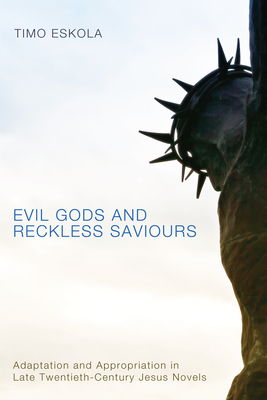
Late twentieth-century Jesus novels carve out a completely new picture of Jesus. Those written by Norman Mailer, Jose Saramago, Michele Roberts, Marianne Fredriksson, and Ki Longfellow, among others, provide inversive revisions of the canonical Gospels. Their adaptations often turn into a critique of the whole of Christian history. The contrast novels investigated in this study end up with appropriations that are based on prototypical rewriting. They aim at the rehabilitation of Judas, and some of them make Mary Magdalene the key figure of Christianity. Saramago describes God as a bloodthirsty tyrant, and Mailer makes God battle the devil in a ""Manichaen"" sense as with an equal. The main result of this intertextual analysis is that these authors have adopted Nietzschean ideas in their writing. An attack on the so-called biblical slave morality and violent concept of God deprives Jesus of his Jewish messianic identity, makes Old Testament law a contradiction of life, calls sacrificial soteriology a violent paradigm supporting oppression, and presents God as a cruel monster. As a result, Jewish faith appears in a negative light. Apparently, Western culture still harbours anti-Judaic attitudes, albeit hidden beneath sentiments of equality and tolerance. Timo Eskola skillfully shows that despite the evident post-Holocaust consciousness present in the novels, they actually adopt an arrogant and ironic refutation of Jewish beliefs and Old Testament faith.
Log in to write a review for this book.
No reviews yet. Be the first to share your opinion.
Biography not available.