Fitzsimmons, Lorna Author
Biography not available.

Browse all FOLKLORE books
Browse all GARDENS books
Browse all GRAPHIC NOVELS books
Browse all HISTORY - MEDIEVAL books
Browse all HUMOUR books
Browse all Juvenile Fiction : Biographical - Other books
Browse all Juvenile Fiction : Historical - Other books
Browse all Juvenile Fiction : Legends, Myths, & Fables - Other books
Browse all Juvenile Fiction : People & Places - Other books
Browse all Juvenile Fiction : People & Places - United States - Other books
Browse all Juvenile Fiction : Religious - Other books
Browse all Juvenile Nonfiction : History - Other books
Browse all Juvenile Nonfiction : Mathematics - Advanced books
Browse all Juvenile Nonfiction : People & Places - Other books
Browse all Juvenile Nonfiction : People & Places - United States - Othe books
Browse all LITERARY STUDIES books
Browse all LONDON books
Browse all Medical : Nursing - Mental Health books
Browse all MIND books
Browse all MUSEOLOGY books
Browse all NON-CLASSIFIABLE books
Browse all NONLINEAR SCIENCE books
Browse all POPULAR SCIENCE books
Browse all RELIGIOUS STUDIES books
Browse all SPIRIT books
Browse all SPORT books
Browse all TRAVEL WRITING books
 Out of Stock
Hardback · ISBN 9781611461220
Inclusive of GST and other taxes
Arriving at your doorstep in 10-15 days
Our logisitcs team will make sure everyitem is delivered safely
| ISBN | 9781611461220 |
|---|---|
| Publisher | Lehigh University Press |
| Publication date | August 2012 |
| Language | English |
| MRP | £90.00 GBP |
| Page count | 232 |
| Item weight | 106 g |
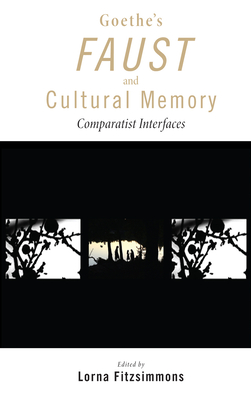
This book is an interdisciplinary collection of essays examining Goethe's Faust and its derivatives in European, North American, and South American cultural contexts. It takes both a canonic and archival approach to Faust in studies of adaptations, performances, appropriations, sources, and the translation of the drama contextualized within cultural environments ranging from Gnosticism to artificial intelligence. Lorna Fitzsimmons' introduction sets this scholarship within a critical framework that draws together work on intertextuality and memory. Alan Corkhill looks at the ways in which the authority of the word is critiqued in Faust and Marlowe's Dr. Faustus. Robert E. Norton revisits the question of Herder as Faust and the early twentieth-century context in which the claim resonated. J. M. van der Laan explores the symbolic possibilities of the mysterious Eternal-Feminine. Frederick Burwick examines Coleridge's critique of Goethe's Faust and his own plans for a Faustian tale on Michael Scott. Andrew Bush demonstrates how Estanislao del Campo's poem "Fausto" retells Gounod's opera in the sociolect of Argentine gauchos. David G. John examines complete productions of Goethe's Faust by Peter Stein and the Goetheanum. Jörg Esleben surveys contemporary Canadian interplay with Goethe's Faust. Susanne Ledanff discusses the significance of Goethe's Faust for Werner Fritsch's avant-garde "Theater of the Now." Bruce J. MacLennan examines Faust from the perspective of a researcher in several Faustian technologies: artificial intelligence, autonomous robotics, artificial life, and artificial morphogenesis.
Log in to write a review for this book.
No reviews yet. Be the first to share your opinion.
Biography not available.