Kennepohl, Dietmar Editor
Biography not available.

Browse all FOLKLORE books
Browse all GARDENS books
Browse all GRAPHIC NOVELS books
Browse all HISTORY - MEDIEVAL books
Browse all HUMOUR books
Browse all Juvenile Fiction : Biographical - Other books
Browse all Juvenile Fiction : Historical - Other books
Browse all Juvenile Fiction : Legends, Myths, & Fables - Other books
Browse all Juvenile Fiction : People & Places - Other books
Browse all Juvenile Fiction : People & Places - United States - Other books
Browse all Juvenile Fiction : Religious - Other books
Browse all Juvenile Nonfiction : History - Other books
Browse all Juvenile Nonfiction : Mathematics - Advanced books
Browse all Juvenile Nonfiction : People & Places - Other books
Browse all Juvenile Nonfiction : People & Places - United States - Othe books
Browse all LITERARY STUDIES books
Browse all LONDON books
Browse all Medical : Nursing - Mental Health books
Browse all MIND books
Browse all MUSEOLOGY books
Browse all NON-CLASSIFIABLE books
Browse all NONLINEAR SCIENCE books
Browse all POPULAR SCIENCE books
Browse all RELIGIOUS STUDIES books
Browse all SPIRIT books
Browse all SPORT books
Browse all TRAVEL WRITING books
 Out of Stock
Hardback · ISBN 9781620361870
Inclusive of GST and other taxes
Arriving at your doorstep in 10-15 days
Our logisitcs team will make sure everyitem is delivered safely
| ISBN | 9781620361870 |
|---|---|
| Publisher | Routledge |
| Publication date | August 2016 |
| Language | English |
| MRP | £171.99 GBP |
| Page count | 274 |
| Item weight | 153 g |
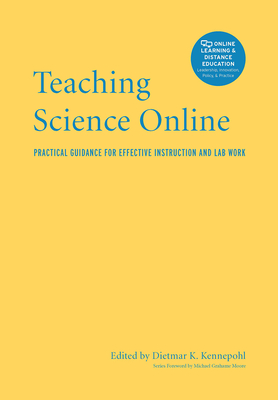
With the increasing focus on science education, growing attention is being paid to how science is taught. Educators in science and science-related disciplines are recognizing that distance delivery opens up new opportunities for delivering information, providing interactivity, collaborative opportunities and feedback, as well as for increasing access for students. This book presents the guidance of expert science educators from the US and from around the globe. They describe key concepts, delivery modes and emerging technologies, and offer models of practice. The book places particular emphasis on experimentation, lab and field work as they are fundamentally part of the education in most scientific disciplines. Chapters include: * Discipline methodology and teaching strategies in the specific areas of physics, biology, chemistry and earth sciences.* An overview of the important and appropriate learning technologies (ICTs) for each major science.* Best practices for establishing and maintaining a successful course online.* Insights and tips for handling practical components like laboratories and field work.* Coverage of breaking topics, including MOOCs, learning analytics, open educational resources and m-learning.* Strategies for engaging your students online.
Log in to write a review for this book.
No reviews yet. Be the first to share your opinion.
Biography not available.