Simpson, Pamela H. Author
Biography not available.

Browse all FOLKLORE books
Browse all GARDENS books
Browse all GRAPHIC NOVELS books
Browse all HISTORY - MEDIEVAL books
Browse all HUMOUR books
Browse all Juvenile Fiction : Biographical - Other books
Browse all Juvenile Fiction : Historical - Other books
Browse all Juvenile Fiction : Legends, Myths, & Fables - Other books
Browse all Juvenile Fiction : People & Places - Other books
Browse all Juvenile Fiction : People & Places - United States - Other books
Browse all Juvenile Fiction : Religious - Other books
Browse all Juvenile Nonfiction : History - Other books
Browse all Juvenile Nonfiction : Mathematics - Advanced books
Browse all Juvenile Nonfiction : People & Places - Other books
Browse all Juvenile Nonfiction : People & Places - United States - Othe books
Browse all LITERARY STUDIES books
Browse all LONDON books
Browse all Medical : Nursing - Mental Health books
Browse all MIND books
Browse all MUSEOLOGY books
Browse all NON-CLASSIFIABLE books
Browse all NONLINEAR SCIENCE books
Browse all POPULAR SCIENCE books
Browse all RELIGIOUS STUDIES books
Browse all SPIRIT books
Browse all SPORT books
Browse all TRAVEL WRITING books
 Out of Stock
Paperback · ISBN 9781621901570
Inclusive of GST and other taxes
Arriving at your doorstep in 10-15 days
Our logisitcs team will make sure everyitem is delivered safely
| ISBN | 9781621901570 |
|---|---|
| Publisher | University of Tennessee Press |
| Publication date | June 2016 |
| Language | English |
| MRP | £19.99 GBP |
| Page count | 228 |
| Item weight | 102 g |
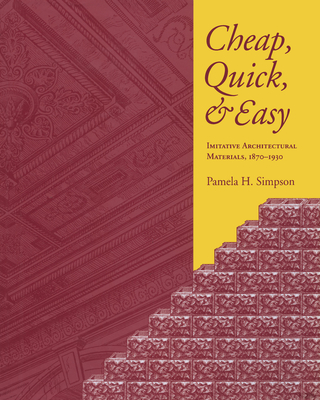
In this innovative study, Pamela H. Simpson examines the architectural materials that proliferated between 1870 and 1930. Produced by new technology, promoted by new forms of advertising, and eagerly adopted by a new middle class, these "cheap, quick, and easy" materials helped to transform building practices in the United States and Great Britain.
As Simpson shows in fascinating detail, rockface concrete blocks, pressed metal imitations of stone, linoleum "marble" and "parquet," and embossed wall coverings made available to the masses a host of ornamental effects that only the wealthy could previously have afforded. But, she notes, wherever these new materials appeared, a heated debate over the appropriateness of imitation followed. Were these materials merely tasteless shams? Or were they economical, durable alternatives that democratically extended the possibilities of ornamentation?
Simpson devotes chapters to each of the various ornamental materials, considering its precursors, invention, production, and distribution. In her final chapter, she traces the history of the aesthetic debate over imitation and analyzes the social meaning of the materials. Far from being "bad taste," she concludes, these new ornamental forms reflected modernism, democracy, and progress--some of the most deeply held values of the period.
Log in to write a review for this book.
No reviews yet. Be the first to share your opinion.
Biography not available.