Brandes, Stuart Author
Biography not available.

Browse all FOLKLORE books
Browse all GARDENS books
Browse all GRAPHIC NOVELS books
Browse all HISTORY - MEDIEVAL books
Browse all HUMOUR books
Browse all Juvenile Fiction : Biographical - Other books
Browse all Juvenile Fiction : Historical - Other books
Browse all Juvenile Fiction : Legends, Myths, & Fables - Other books
Browse all Juvenile Fiction : People & Places - Other books
Browse all Juvenile Fiction : People & Places - United States - Other books
Browse all Juvenile Fiction : Religious - Other books
Browse all Juvenile Nonfiction : History - Other books
Browse all Juvenile Nonfiction : Mathematics - Advanced books
Browse all Juvenile Nonfiction : People & Places - Other books
Browse all Juvenile Nonfiction : People & Places - United States - Othe books
Browse all LITERARY STUDIES books
Browse all LONDON books
Browse all Medical : Nursing - Mental Health books
Browse all MIND books
Browse all MUSEOLOGY books
Browse all NON-CLASSIFIABLE books
Browse all NONLINEAR SCIENCE books
Browse all POPULAR SCIENCE books
Browse all RELIGIOUS STUDIES books
Browse all SPIRIT books
Browse all SPORT books
Browse all TRAVEL WRITING books
 Out of Stock
Hardback · ISBN 9781621907466
Inclusive of GST and other taxes
Arriving at your doorstep in 10-15 days
Our logisitcs team will make sure everyitem is delivered safely
| ISBN | 9781621907466 |
|---|---|
| Publisher | University of Tennessee Press |
| Publication date | May 2023 |
| Language | English |
| MRP | £27.99 GBP |
| Page count | 340 |
| Item weight | 138 g |
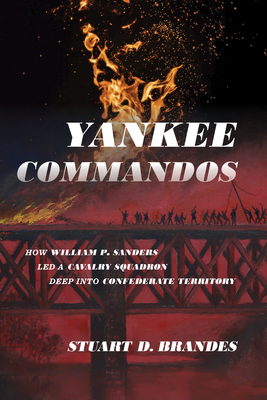
In June of 1863, Col. William P. Sanders led a cavalry raid of 1,300 men from the Union Army of the Ohio through Confederate-held East Tennessee. The raid severed the Confederate rail supply line from Virginia to the Western Theater and made national headlines. Until now, this incredible feat has been relegated to a footnote in the voluminous history of the American Civil War.
In Yankee Commandos, Stuart Brandes presents readers with the most complete account of the Sanders raid to date by using newly discovered and under-explored materials, such as Sanders's official reports and East Tennessee diaries and memoirs in which Sanders is chronicled. The book presents important details of a cavalry raid through East Tennessee that further turned the tide of war for the Union in the Western Theater. It also sheds light on the raid's effect on the divided civilian population of East Tennessee, where, unlike the largely pro-secession populations of Middle and West Tennessee, the fraction of enlisted men to the Union cause rose to nearly a quarter.
Colonel Sanders remains an enigma of the American Civil War. (He was a cousin of Confederate president Jefferson Davis, and his father and three brothers donned Confederate gray at the outbreak of the war.) By studying the legend of Sanders and his raid, Brandes fills an important gap in Civil War scholarship and in the story of Unionism in a mostly Confederate-sympathizing state.
Log in to write a review for this book.
No reviews yet. Be the first to share your opinion.
Biography not available.