Shelley, Mary Author
Biography not available.

Browse all FOLKLORE books
Browse all GARDENS books
Browse all GRAPHIC NOVELS books
Browse all HISTORY - MEDIEVAL books
Browse all HUMOUR books
Browse all Juvenile Fiction : Biographical - Other books
Browse all Juvenile Fiction : Historical - Other books
Browse all Juvenile Fiction : Legends, Myths, & Fables - Other books
Browse all Juvenile Fiction : People & Places - Other books
Browse all Juvenile Fiction : People & Places - United States - Other books
Browse all Juvenile Fiction : Religious - Other books
Browse all Juvenile Nonfiction : History - Other books
Browse all Juvenile Nonfiction : Mathematics - Advanced books
Browse all Juvenile Nonfiction : People & Places - Other books
Browse all Juvenile Nonfiction : People & Places - United States - Othe books
Browse all LITERARY STUDIES books
Browse all LONDON books
Browse all Medical : Nursing - Mental Health books
Browse all MIND books
Browse all MUSEOLOGY books
Browse all NON-CLASSIFIABLE books
Browse all NONLINEAR SCIENCE books
Browse all POPULAR SCIENCE books
Browse all RELIGIOUS STUDIES books
Browse all SPIRIT books
Browse all SPORT books
Browse all TRAVEL WRITING books
 Out of Stock
Hardback · ISBN 9781636371177
Inclusive of GST and other taxes
Arriving at your doorstep in 10-15 days
Our logisitcs team will make sure everyitem is delivered safely
| ISBN | 9781636371177 |
|---|---|
| Publisher | Bibliotech Press |
| Publication date | September 2020 |
| Language | English |
| MRP | £21.95 GBP |
| Page count | 176 |
| Item weight | 85 g |
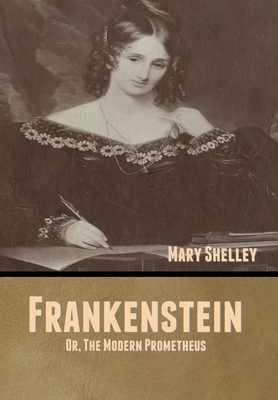
Frankenstein; or, The Modern Prometheus is an 1818 novel written by English author Mary Shelley (1797-1851) that tells the story of Victor Frankenstein, a young scientist who creates a sapient creature in an unorthodox scientific experiment. Shelley started writing the story when she was 18, and the first edition was published anonymously in London on 1 January 1818, when she was 20. Her name first appeared in the second edition published in Paris in 1821.
Shelley travelled through Europe in 1815 along the river Rhine in Germany stopping in Gernsheim, 17 kilometres (11 mi) away from Frankenstein Castle, where two centuries before, an alchemist engaged in experiments. She then journeyed to the region of Geneva, Switzerland, where much of the story takes place. The topics of galvanism and occult ideas were themes of conversation among her companions, particularly her lover and future husband Percy B. Shelley. In 1816, Mary, Percy and Lord Byron had a competition to see who could write the best horror story. After thinking for days, Shelley dreamt about a scientist who created life and was horrified by what he had made, inspiring the novel.
Though Frankenstein is infused with elements of the Gothic novel and the Romantic movement, Brian Aldiss has argued that it should be considered the first true science fiction story. In contrast to previous stories with fantastical elements resembling those of later science fiction, Aldiss states the central character "makes a deliberate decision" and "turns to modern experiments in the laboratory" to achieve fantastic results. It has had a considerable influence in literature and popular culture and spawned a complete genre of horror stories, films and plays.
Since the publication of the novel, the name "Frankenstein" has often been used to refer to the monster itself. (wikipedia.org)
Log in to write a review for this book.
No reviews yet. Be the first to share your opinion.
Biography not available.