Fulcher, Keston H. Author
Biography not available.

Browse all FOLKLORE books
Browse all GARDENS books
Browse all GRAPHIC NOVELS books
Browse all HISTORY - MEDIEVAL books
Browse all HUMOUR books
Browse all Juvenile Fiction : Biographical - Other books
Browse all Juvenile Fiction : Historical - Other books
Browse all Juvenile Fiction : Legends, Myths, & Fables - Other books
Browse all Juvenile Fiction : People & Places - Other books
Browse all Juvenile Fiction : People & Places - United States - Other books
Browse all Juvenile Fiction : Religious - Other books
Browse all Juvenile Nonfiction : History - Other books
Browse all Juvenile Nonfiction : Mathematics - Advanced books
Browse all Juvenile Nonfiction : People & Places - Other books
Browse all Juvenile Nonfiction : People & Places - United States - Othe books
Browse all LITERARY STUDIES books
Browse all LONDON books
Browse all Medical : Nursing - Mental Health books
Browse all MIND books
Browse all MUSEOLOGY books
Browse all NON-CLASSIFIABLE books
Browse all NONLINEAR SCIENCE books
Browse all POPULAR SCIENCE books
Browse all RELIGIOUS STUDIES books
Browse all SPIRIT books
Browse all SPORT books
Browse all TRAVEL WRITING books
 Out of Stock
Hardback · ISBN 9781642671803
Inclusive of GST and other taxes
Arriving at your doorstep in 10-15 days
Our logisitcs team will make sure everyitem is delivered safely
| ISBN | 9781642671803 |
|---|---|
| Publisher | Routledge |
| Publication date | July 2021 |
| Language | English |
| MRP | £171.99 GBP |
| Page count | 212 |
| Item weight | 100 g |
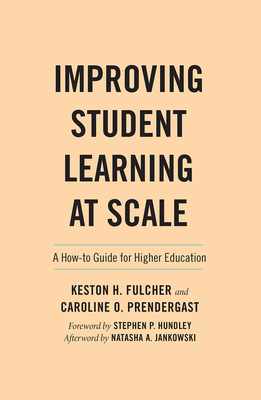
This book is a step-by-step guide for improving student learning in higher education. The authors argue that a fundamental obstacle to improvement is that higher educators, administrators, and assessment professionals do not know how to improve student learning at scale. By this they mean improvement efforts that span an entire program, affecting all affiliated students. The authors found that faculty and administrators particularly struggle to conceptualize and implement multi-section, multi-course improvement efforts. It is unsurprising that ambitious, wide-reaching improvement efforts like these would pose difficulty in their organization and implementation. This is precisely the problem the authors address. The book provides practical strategies for learning improvement, enabling faculty to collaborate, and integrating leadership, social dynamics, curriculum, pedagogy, assessment, and faculty development. In Chapter 2, the authors tell a program-level improvement story from the perspective of a faculty member. Chapter 3 inverts Chapter 2. Beginning from the re-assess stage, the authors work their way back to the individual faculty member first pondering whether she can do something to impact students' skills. They peel back each layer of the process and imagine how learning improvement efforts might be thwarted at each stage. Chapters 4 through 9 dig deeper into the learning improvement steps introduced in Chapters 2 and 3. Each chapter provides strategies to help higher educators climb each step successfully. Chapter 10 paints a picture of what higher education could look like in 2041 if learning improvement were embraced. And, finally, Chapter 11 describes what you can do to support the movement.
Log in to write a review for this book.
No reviews yet. Be the first to share your opinion.
Biography not available.
Biography not available.