Singh, Java Editor
Biography not available.

Browse all FOLKLORE books
Browse all GARDENS books
Browse all GRAPHIC NOVELS books
Browse all HISTORY - MEDIEVAL books
Browse all HUMOUR books
Browse all Juvenile Fiction : Biographical - Other books
Browse all Juvenile Fiction : Historical - Other books
Browse all Juvenile Fiction : Legends, Myths, & Fables - Other books
Browse all Juvenile Fiction : People & Places - Other books
Browse all Juvenile Fiction : People & Places - United States - Other books
Browse all Juvenile Fiction : Religious - Other books
Browse all Juvenile Nonfiction : History - Other books
Browse all Juvenile Nonfiction : Mathematics - Advanced books
Browse all Juvenile Nonfiction : People & Places - Other books
Browse all Juvenile Nonfiction : People & Places - United States - Othe books
Browse all LITERARY STUDIES books
Browse all LONDON books
Browse all Medical : Nursing - Mental Health books
Browse all MIND books
Browse all MUSEOLOGY books
Browse all NON-CLASSIFIABLE books
Browse all NONLINEAR SCIENCE books
Browse all POPULAR SCIENCE books
Browse all RELIGIOUS STUDIES books
Browse all SPIRIT books
Browse all SPORT books
Browse all TRAVEL WRITING books
 Out of Stock
Hardback · ISBN 9781648891137
Inclusive of GST and other taxes
Arriving at your doorstep in 10-15 days
Our logisitcs team will make sure everyitem is delivered safely
| ISBN | 9781648891137 |
|---|---|
| Publisher | Vernon Press |
| Publication date | November 2021 |
| Language | English |
| MRP | £50.40 GBP |
| Page count | 300 |
| Item weight | 123 g |
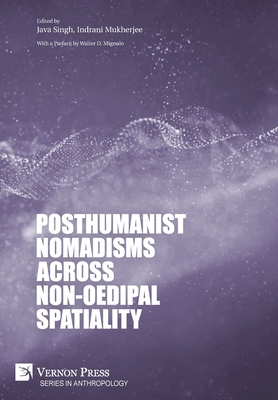
As an epistemological perspective, 'nomadism' is an emerging field of scholarship, offering intersectionality with eco-criticism, feminism, post-colonialism, migration studies, and translation. Much of the scholarship that uses the precepts of nomadism to read cultural texts and phenomena is scattered as separate articles in academic journals or as single chapters in books wherein the primary focus is the intersectional fields. Few book-length publications solely focus on the ramifications of nomadism; Posthumanist Nomadisms across non-Oedipal Spatiality fills that void.
The fifteen chapters in this volume explore the possibilities offered by the nomadic perspective to explore a wide range of literary and cultural texts; organized into three sections, "Nomadic Assemblages," "Non-Oedipal Cartographies", and "Space-Time Montages", that work as one to negate absorption into the interiority of sovereign territory. These sections are not an attempt at corralling the nomadic spirit into separate enclosures; instead, they are bands of warriors that operate the violence of the hunted animal, dehumanized human others, and earth others. The chapters are in constant multi-vocal conversations with narratives that camp on the turbulent weathers of global transitory spaces. They charter real or intellectual turfs of interstitial/rhizomatic nomadic epistemologies as political resistance to the exclusionary practices of a violently wired world.
This book will appeal to post-graduate students, researchers, and faculty in the departments of literature, comparative literary and cultural studies. Researchers in sociology, cultural anthropology, gender studies, and migration studies will also find the material applicable to the expanding approaches available in their fields.
Log in to write a review for this book.
No reviews yet. Be the first to share your opinion.
Biography not available.
Biography not available.
Biography not available.