Ralston, John P. Author
Biography not available.

Browse all FOLKLORE books
Browse all GARDENS books
Browse all GRAPHIC NOVELS books
Browse all HISTORY - MEDIEVAL books
Browse all HUMOUR books
Browse all Juvenile Fiction : Biographical - Other books
Browse all Juvenile Fiction : Historical - Other books
Browse all Juvenile Fiction : Legends, Myths, & Fables - Other books
Browse all Juvenile Fiction : People & Places - Other books
Browse all Juvenile Fiction : People & Places - United States - Other books
Browse all Juvenile Fiction : Religious - Other books
Browse all Juvenile Nonfiction : History - Other books
Browse all Juvenile Nonfiction : Mathematics - Advanced books
Browse all Juvenile Nonfiction : People & Places - Other books
Browse all Juvenile Nonfiction : People & Places - United States - Othe books
Browse all LITERARY STUDIES books
Browse all LONDON books
Browse all Medical : Nursing - Mental Health books
Browse all MIND books
Browse all MUSEOLOGY books
Browse all NON-CLASSIFIABLE books
Browse all NONLINEAR SCIENCE books
Browse all POPULAR SCIENCE books
Browse all RELIGIOUS STUDIES books
Browse all SPIRIT books
Browse all SPORT books
Browse all TRAVEL WRITING books
 Out of Stock
Paperback · ISBN 9781681741628
Inclusive of GST and other taxes
Arriving at your doorstep in 10-15 days
Our logisitcs team will make sure everyitem is delivered safely
| ISBN | 9781681741628 |
|---|---|
| Publisher | IOP Concise Physics |
| Publication date | May 2018 |
| Language | English |
| MRP | £73.69 GBP |
| Page count | 222 |
| Item weight | 87 g |
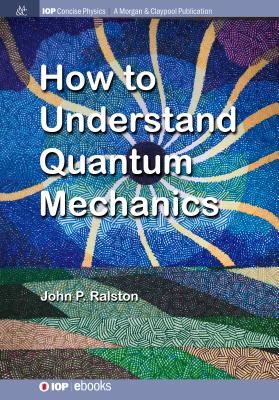
How to Understand Quantum Mechanics presents an accessible introduction to understanding quantum mechanics in a natural and intuitive way, which was advocated by Erwin Schroedinger and Albert Einstein. A theoretical physicist reveals dozens of easy tricks that avoid long calculations, makes complicated things simple, and bypasses the worthless anguish of famous scientists who died in angst. The author's approach is light-hearted, and the book is written to be read without equations, however all relevant equations still appear with explanations as to what they mean. The book entertainingly rejects quantum disinformation, the MKS unit system (obsolete), pompous non-explanations, pompous people, the hoax of the 'uncertainty principle' (it is just a math relation), and the accumulated junk-DNA that got into the quantum operating system by misreporting it. The order of presentation is new and also unique by warning about traps to be avoided, while separating topics such as quantum probability to let the Schroedinger equation be appreciated in the simplest way on its own terms. This is also the first book on quantum theory that is not based on arbitrary and confusing axioms or foundation principles. The author is so unprincipled he shows where obsolete principles duplicated basic math facts, became redundant, and sometimes were just pawns in academic turf wars. The book has many original topics not found elsewhere, and completely researched references to original historical sources and anecdotes concerting the unrecognized scientists who actually did discover things, did not all get Nobel prizes, and yet had interesting productive lives.
Log in to write a review for this book.
No reviews yet. Be the first to share your opinion.
Biography not available.