Haigh, Karen Zita Author
Biography not available.

Browse all FOLKLORE books
Browse all GARDENS books
Browse all GRAPHIC NOVELS books
Browse all HISTORY - MEDIEVAL books
Browse all HUMOUR books
Browse all Juvenile Fiction : Biographical - Other books
Browse all Juvenile Fiction : Historical - Other books
Browse all Juvenile Fiction : Legends, Myths, & Fables - Other books
Browse all Juvenile Fiction : People & Places - Other books
Browse all Juvenile Fiction : People & Places - United States - Other books
Browse all Juvenile Fiction : Religious - Other books
Browse all Juvenile Nonfiction : History - Other books
Browse all Juvenile Nonfiction : Mathematics - Advanced books
Browse all Juvenile Nonfiction : People & Places - Other books
Browse all Juvenile Nonfiction : People & Places - United States - Othe books
Browse all LITERARY STUDIES books
Browse all LONDON books
Browse all Medical : Nursing - Mental Health books
Browse all MIND books
Browse all MUSEOLOGY books
Browse all NON-CLASSIFIABLE books
Browse all NONLINEAR SCIENCE books
Browse all POPULAR SCIENCE books
Browse all RELIGIOUS STUDIES books
Browse all SPIRIT books
Browse all SPORT books
Browse all TRAVEL WRITING books
 Out of Stock
Hardback · ISBN 9781685691035
Inclusive of GST and other taxes
Arriving at your doorstep in 10-15 days
Our logisitcs team will make sure everyitem is delivered safely
| ISBN | 9781685691035 |
|---|---|
| Publisher | Artech House |
| Publication date | August 2025 |
| Language | English |
| MRP | £104.00 GBP |
| Page count | 436 |
| Item weight | 165 g |
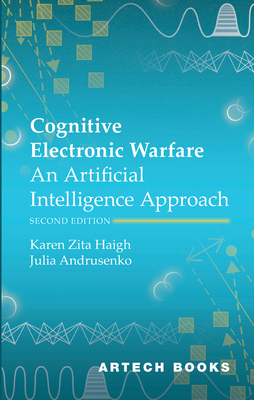
Cognitive Electronic Warfare: An Artificial Intelligence Approach, Second Edition explores how cutting-edge technologies like artificial intelligence (AI) and machine learning (ML) are transforming national defense. Updated to reflect rapid advancements in technology and operational needs, this expanded second edition demonstrates how to architect intelligent electronic warfare (EW) platforms that are effective and adaptive.
Dive into the challenges and trade-offs of various AI techniques and gain a basis for gauging the best approach for specific EW applications. Learn how to break large AI problems into smaller, deployable pieces, and evaluate cognitive systems to ensure they meet project requirements. Explore how ML can be used for electronic support, including signal characterization, classification, pattern recognition, and intent recognition functions. Examine AI for decision making in electronic protect (EP), electronic attack (EA), and electronic battle management (EBM), covering planning, optimization, and scheduling techniques and associated temporal and spatial trade-offs. Technical approaches for managing real-time, in-mission, and on-board ML are also showcased.
Further consideration is given to emerging technologies like Generative AI, TinyML for embedded platforms, and DevMLOps, equipping practitioners to meet the demands of modern, agile system development. Gain practical insights into classification, intent recognition, planning algorithms, resource-constrained optimization, and knowledge management. Real-world case studies, evaluation approaches, and architectural best practices are provided to help unite theory and deployment.
This is a must-have resource for AI professionals, EW and radio frequency (RF) engineers, defense professionals, operational electronic warfare officers, and researchers shaping the future of AI-powered defense.
Log in to write a review for this book.
No reviews yet. Be the first to share your opinion.
Biography not available.
Biography not available.