Smith, Paul Author
Biography not available.

Browse all FOLKLORE books
Browse all GARDENS books
Browse all GRAPHIC NOVELS books
Browse all HISTORY - MEDIEVAL books
Browse all HUMOUR books
Browse all Juvenile Fiction : Biographical - Other books
Browse all Juvenile Fiction : Historical - Other books
Browse all Juvenile Fiction : Legends, Myths, & Fables - Other books
Browse all Juvenile Fiction : People & Places - Other books
Browse all Juvenile Fiction : People & Places - United States - Other books
Browse all Juvenile Fiction : Religious - Other books
Browse all Juvenile Nonfiction : History - Other books
Browse all Juvenile Nonfiction : Mathematics - Advanced books
Browse all Juvenile Nonfiction : People & Places - Other books
Browse all Juvenile Nonfiction : People & Places - United States - Othe books
Browse all LITERARY STUDIES books
Browse all LONDON books
Browse all Medical : Nursing - Mental Health books
Browse all MIND books
Browse all MUSEOLOGY books
Browse all NON-CLASSIFIABLE books
Browse all NONLINEAR SCIENCE books
Browse all POPULAR SCIENCE books
Browse all RELIGIOUS STUDIES books
Browse all SPIRIT books
Browse all SPORT books
Browse all TRAVEL WRITING books
 Out of Stock
Paperback · ISBN 9781710741476
Inclusive of GST and other taxes
Arriving at your doorstep in 10-15 days
Our logisitcs team will make sure everyitem is delivered safely
| ISBN | 9781710741476 |
|---|---|
| Publisher | Independently published |
| Publication date | December 2019 |
| Language | English |
| MRP | £11.88 GBP |
| Page count | 122 |
| Item weight | 42 g |
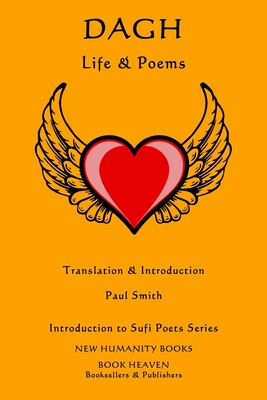
DAGH: LIFE & POEMS Translation & Introduction by Paul Smith Nawab Mirza Khan Dagh Dehlvi was born in Delhi at Chandni Chowk in 1831. He is considered the last great poet of the Mughal period of Urdu poetry. His takhallus or pen-name of Dagh means 'scar'. When he was a young boy his father was sentenced to death as a suspect in the murder of Sir William Fraser. Dagh's mother later wedded Mirza Fakhru, Emperor Badhur Shah Zafar's son and Dagh became one in the royal household. His teacher of poetry became Zauq who was also Zafar's mentor in this regard. Ghalib was a relation of his and he could also seek advice from him on his poetry. His fame as a fine poet in Delhi soon came and he was loved for his simple style and his naturalism and the musical nature of his work. Dagh Dehlvi suffered a paralytic stroke and died on the 17th March 1905 at the age of 73. He composed four Divans of ghazals (16,000 couplets) and a masnavi and some qasidas and ruba'is. Dagh had started reciting poetry at the age of ten. His forte was the ghazal. Usage of common words and phrases and simplicity was distinctive of his style. Dagh deliberated upon the aesthetic principles of the ghazal as a form of intimate poetic conversation. He changed the common speech and combined the poetic manners of the Lucknow and Delhi schools. In its totality, Dagh's poetry is idiomatic and appealing, laden with emotions and good humour. Apart from his four divans, representing the last hallmarks of classical poetry, he has left behind a bunch of letters and a long narrative poem. Like his pupils Iqbal, Seemab and Jigar, many of his poems have a strong Sufi influence. This is the only translation of a selection of his many books of ghazals and it has the correct rhyme structure of the originals. Introduction on the Urdu Language, Urdu Poetry, His Life & Times & Poetry and on the ghazal. A Selected Bibliography. 120 pages. Paul Smith (b. 1945) is a poet, author and translator of many books of Sufi poets from the Persian, Arabic, Urdu, Turkish, Pashtu and other languages including Hafiz, Sadi, Nizami, Rumi, 'Attar, Sana'i, Jahan Khatun, Obeyd Zakani, Mu'in, Amir Khusrau, Nesimi, Kabir, Anvari, Ansari, Jami, Khayyam, Rudaki, Yunus Emre and others, and his own poetry, fiction, plays, biographies, children's books & screenplays. amazon.com/authoe/smithpa
Log in to write a review for this book.
No reviews yet. Be the first to share your opinion.
Biography not available.
Biography not available.