Owen Hopkins Author
Biography not available.

Browse all ART CRITICISM books
Browse all Ashworth books
Browse all FOLKLORE books
Browse all GARDENS books
Browse all GRAPHIC NOVELS books
Browse all Hamilton books
Browse all HISTORY - MEDIEVAL books
Browse all HUMOUR books
Browse all KINDRED books
Browse all LITERARY STUDIES books
Browse all LONDON books
Browse all Lozada books
Browse all Medical : Nursing - Mental Health books
Browse all MIND books
Browse all MUSEOLOGY books
Browse all NON-CLASSIFIABLE books
Browse all NONLINEAR SCIENCE books
Browse all Ormonde books
Browse all POPULAR SCIENCE books
Browse all RELIGIOUS STUDIES books
Browse all SPIRIT books
Browse all SPORT books
Browse all TRAVEL WRITING books
 Out of Stock
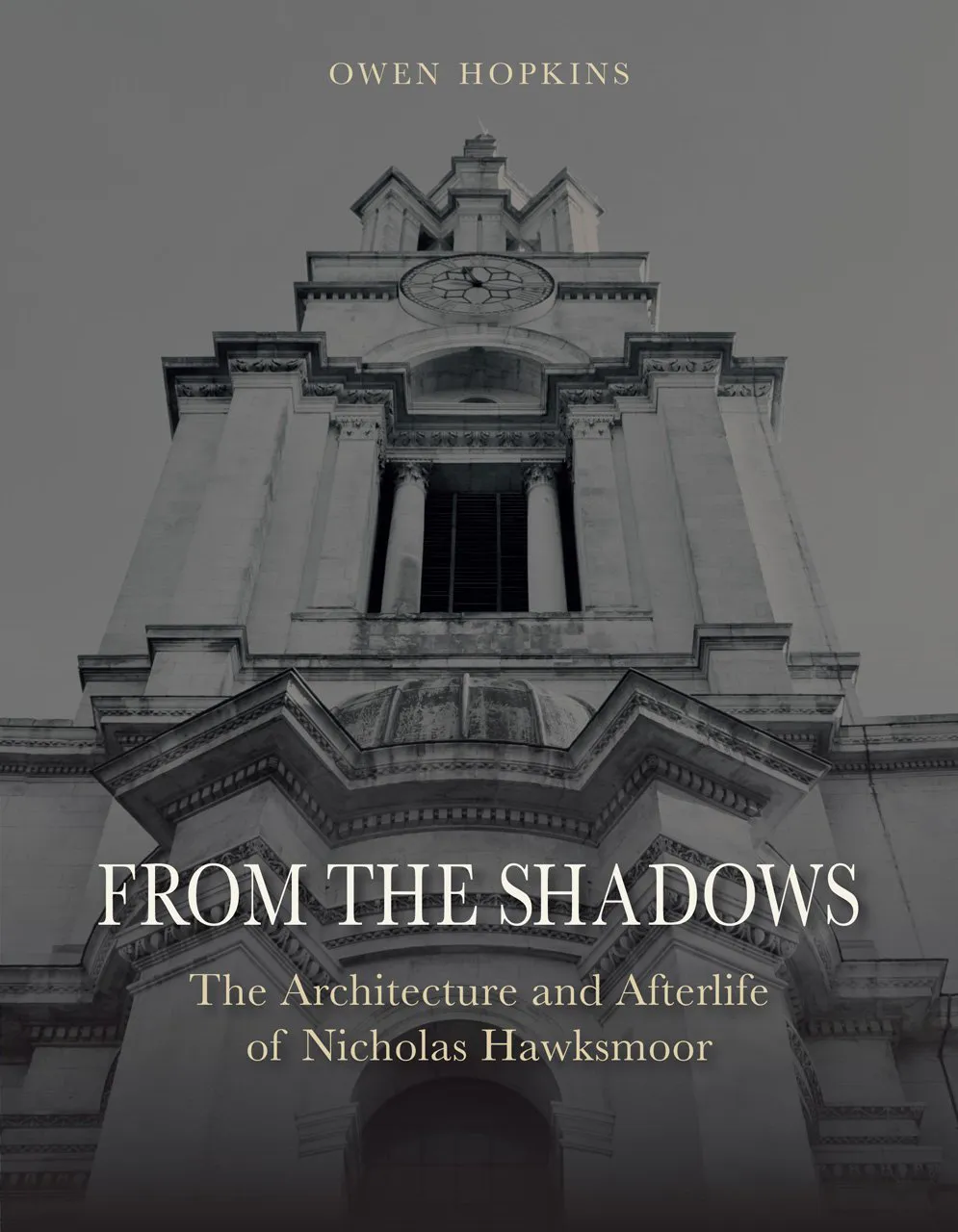
The Architecture and Afterlife of Nicholas Hawksmoor
Hardback · ISBN 9781780235158
Inclusive of GST and other taxes
Arriving at your doorstep in 8-10 days
Our logisitcs team will make sure everyitem is delivered safely
| ISBN | 9781780235158 |
|---|---|
| Subtitle | The Architecture and Afterlife of Nicholas Hawksmoor |
| Publisher | Reaktion Books |
| Language | English |
| MRP | £37.00 GBP |
| Page count | 344 |
Nicholas Hawksmoor (1662–1736) is considered one of Britain’s greatest architects. He was involved in the grandest architectural projects of his age and today is best known for his London churches – six idiosyncratic edifices of white Portland stone that remain standing today, proud and tall in the otherwise radically changed cityscape. Until comparatively recently, however, Hawksmoor was thought to be, at best, a second-rate talent: merely Sir Christopher Wren’s slightly odd apprentice, or the practically minded assistant to Sir John Vanbrugh. This book brings to life the dramatic story of Hawksmoor’s resurrection from the margins of history. Charting Hawksmoor’s career and the decline of his reputation, Owen Hopkins offers fresh interpretations of many of his famous works – notably his three East End churches – and shows how over their history Hawksmoor’s buildings have been ignored, abused, altered, recovered and celebrated. Hopkins also charts how, as Hawksmoor returned to prominence during the twentieth century, his work caught the eye of observers as diverse as T. S. Eliot, James Stirling, Robert Venturi and, most famously, Peter Ackroyd, whose novel Hawksmoor (1985) popularized the mythical association of his work with the occult. Meanwhile, passionate campaigns were mounted to save and restore Hawksmoor’s churches, reflecting the strange hold his architecture can have over observers. There is surely no other body of work in British architectural history with the same capacity to intrigue and inspire, perplex and provoke as Hawksmoor’s has done for nearly three centuries.
Log in to write a review for this book.
No reviews yet. Be the first to share your opinion.
Biography not available.