Perry, Robert Alan Author
Biography not available.

Browse all FOLKLORE books
Browse all GARDENS books
Browse all GRAPHIC NOVELS books
Browse all HISTORY - MEDIEVAL books
Browse all HUMOUR books
Browse all Juvenile Fiction : Biographical - Other books
Browse all Juvenile Fiction : Historical - Other books
Browse all Juvenile Fiction : Legends, Myths, & Fables - Other books
Browse all Juvenile Fiction : People & Places - Other books
Browse all Juvenile Fiction : People & Places - United States - Other books
Browse all Juvenile Fiction : Religious - Other books
Browse all Juvenile Nonfiction : History - Other books
Browse all Juvenile Nonfiction : Mathematics - Advanced books
Browse all Juvenile Nonfiction : People & Places - Other books
Browse all Juvenile Nonfiction : People & Places - United States - Othe books
Browse all LITERARY STUDIES books
Browse all LONDON books
Browse all Medical : Nursing - Mental Health books
Browse all MIND books
Browse all MUSEOLOGY books
Browse all NON-CLASSIFIABLE books
Browse all NONLINEAR SCIENCE books
Browse all POPULAR SCIENCE books
Browse all RELIGIOUS STUDIES books
Browse all SPIRIT books
Browse all SPORT books
Browse all TRAVEL WRITING books
 Out of Stock
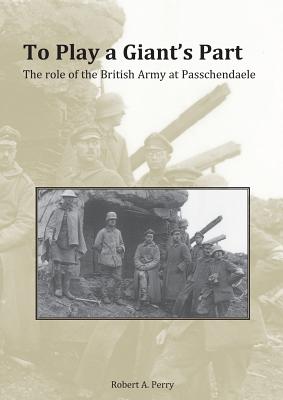
TO PLAY A GIANTS PART
Paperback · ISBN 9781783311460
Inclusive of GST and other taxes
Arriving at your doorstep in 10-15 days
Our logisitcs team will make sure everyitem is delivered safely
| ISBN | 9781783311460 |
|---|---|
| Subtitle | TO PLAY A GIANTS PART |
| Publisher | Naval & Military Press |
| Publication date | November 2014 |
| Language | English |
| MRP | £35.00 GBP |
| Page count | 600 |
| Item weight | 313 g |
To use the name Passchendaele to identify the series of battles fought to the east of Ypres, during the Flanders offensive from the 31st July to the 10th November 1917 is strictly incorrect. There were six major battles between the 31st July and the 9th October, and each battle was to be given an independent title. It was the penultimate battle on the 12th October that was to become officially called the First Battle of Passchendaele, and the final series of attacks between the 26th October and the 10th November, that were to be called the Second Battle of Passchendaele. The conditions of mud and shell-shattered ground experienced during this final period were amongst the worst throughout the whole campaign. There were however periods in August, between the Battle of Pilckem Ridge and the Battle of Langemarck, when conditions were in places as bad, and optimism in the ranks dropped to an all time low. But the name by which the offensive was to be remembered around the world, and the name that was to arouse such emotion, and later controversy, was Passchendaele. Nearly 100 years later, mention of the word Passchendaele still evokes an atmosphere of grim foreboding, despair, and tragedy. The word has become synonymous with images of mud, mutilation and death, and the despair borne of hopelessness and futility. This account will attempt to show that the battles, and the efforts of the men who fought them under collectively the worst conditions the British Army has ever experienced, were far from futile.
Log in to write a review for this book.
No reviews yet. Be the first to share your opinion.
Biography not available.