Musyoka, Millicent Malinda Editor
Biography not available.

Browse all FOLKLORE books
Browse all GARDENS books
Browse all GRAPHIC NOVELS books
Browse all HISTORY - MEDIEVAL books
Browse all HUMOUR books
Browse all Juvenile Fiction : Biographical - Other books
Browse all Juvenile Fiction : Historical - Other books
Browse all Juvenile Fiction : Legends, Myths, & Fables - Other books
Browse all Juvenile Fiction : People & Places - Other books
Browse all Juvenile Fiction : People & Places - United States - Other books
Browse all Juvenile Fiction : Religious - Other books
Browse all Juvenile Nonfiction : History - Other books
Browse all Juvenile Nonfiction : Mathematics - Advanced books
Browse all Juvenile Nonfiction : People & Places - Other books
Browse all Juvenile Nonfiction : People & Places - United States - Othe books
Browse all LITERARY STUDIES books
Browse all LONDON books
Browse all Medical : Nursing - Mental Health books
Browse all MIND books
Browse all MUSEOLOGY books
Browse all NON-CLASSIFIABLE books
Browse all NONLINEAR SCIENCE books
Browse all POPULAR SCIENCE books
Browse all RELIGIOUS STUDIES books
Browse all SPIRIT books
Browse all SPORT books
Browse all TRAVEL WRITING books
 Out of Stock
Paperback · ISBN 9781799881827
Inclusive of GST and other taxes
Arriving at your doorstep in 10-15 days
Our logisitcs team will make sure everyitem is delivered safely
| ISBN | 9781799881827 |
|---|---|
| Publisher | Information Science Reference |
| Publication date | December 2021 |
| Language | English |
| MRP | £132.00 GBP |
| Page count | 440 |
| Item weight | 224 g |
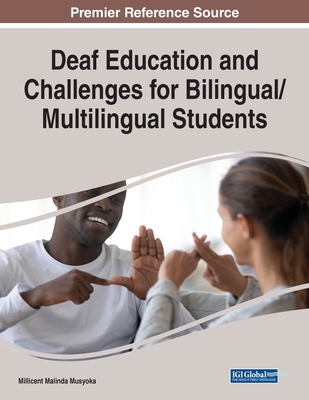
Biliteracy, or the development of reading, writing, speaking, listening, and thinking competencies in more than one language, is a complex and dynamic process. The process is even more challenging when the languages used in the literacy process differ in modality. Biliteracy development among deaf students involves the use of visual languages (i.e., sign languages) and auditory languages (spoken languages). Deaf students' sign language proficiency is strongly related to their literacy abilities. The distinction between bilingualism and multilingualism is critical to our understanding of the underserved, the linguistic deficit, and the underachievement of deaf and hard of hearing (D/HH) immigrant students, thus bringing the multilingual and immigrant aspect into the research on deaf education. Multilingual and immigrant students may face unique challenges in the course of their education. Hence, in the education of D/HH students, the intersection of issues such as biculturalism/multiculturalism, bilingualism/multilingualism, and immigration can create a dilemma for teachers and other stakeholders working with them. Deaf Education and Challenges for Bilingual/Multilingual Students is an essential reference book that provides knowledge, skills, and dispositions for teaching multicultural, multilingual, and immigrant deaf and hard of hearing students globally and identifies the challenges facing the inclusion needs of this population. This book fills a current gap in educational resources for teaching immigrant, multilingual, and multicultural deaf students in learning institutions all over the world. Covering topics such as universal design for learning, inclusion, literacy, and language acquisition, this text is crucial for classroom teachers of deaf or hard of hearing students, faculty in deaf education programs, language instructors, students, pre-service teachers, researchers, and academicians.
Log in to write a review for this book.
No reviews yet. Be the first to share your opinion.
Biography not available.