Ward, Catherine Editor
Biography not available.

Browse all FOLKLORE books
Browse all GARDENS books
Browse all GRAPHIC NOVELS books
Browse all HISTORY - MEDIEVAL books
Browse all HUMOUR books
Browse all Juvenile Fiction : Biographical - Other books
Browse all Juvenile Fiction : Historical - Other books
Browse all Juvenile Fiction : Legends, Myths, & Fables - Other books
Browse all Juvenile Fiction : People & Places - Other books
Browse all Juvenile Fiction : People & Places - United States - Other books
Browse all Juvenile Fiction : Religious - Other books
Browse all Juvenile Nonfiction : History - Other books
Browse all Juvenile Nonfiction : Mathematics - Advanced books
Browse all Juvenile Nonfiction : People & Places - Other books
Browse all Juvenile Nonfiction : People & Places - United States - Othe books
Browse all LITERARY STUDIES books
Browse all LONDON books
Browse all Medical : Nursing - Mental Health books
Browse all MIND books
Browse all MUSEOLOGY books
Browse all NON-CLASSIFIABLE books
Browse all NONLINEAR SCIENCE books
Browse all POPULAR SCIENCE books
Browse all RELIGIOUS STUDIES books
Browse all SPIRIT books
Browse all SPORT books
Browse all TRAVEL WRITING books
 Out of Stock
Paperback · ISBN 9781799897477
Inclusive of GST and other taxes
Arriving at your doorstep in 10-15 days
Our logisitcs team will make sure everyitem is delivered safely
| ISBN | 9781799897477 |
|---|---|
| Publisher | Information Science Reference |
| Publication date | April 2022 |
| Language | English |
| MRP | £132.00 GBP |
| Page count | 372 |
| Item weight | 142 g |
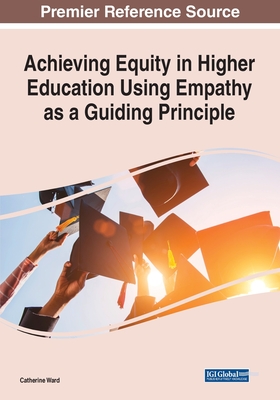
The assertion that empathy is an essential characteristic of equity work in higher education demands educators operate from a place of justice, fairness, and inclusive practice. Empathy is a personal quality that allows educators to consider another's perspective to inform the decision-making process about policy, procedures, program and service design, and teaching pedagogy. Thus, engaging empathy in everyday practice supports the potential to create more equitable and inclusive environments as well as standards for serving a diverse student population. Achieving Equity in Higher Education Using Empathy as a Guiding Principle explores what empathy is, how empathy can be developed, and how empathy can be applied in an educator's practice to achieve equity-mindedness and mitigate inequitable student outcomes in and out of the classroom. The book also argues that self-examination and engaging empathy is a way to thoughtfully examine differences and uphold the values of humanity. Covering topics such as intercultural listening and program development, this reference work is ideal for administrators, practitioners, academicians, scholars, researchers, instructors, and students.
Log in to write a review for this book.
No reviews yet. Be the first to share your opinion.
Biography not available.