Pilnick, Alison Author
Biography not available.

Browse all FOLKLORE books
Browse all GARDENS books
Browse all GRAPHIC NOVELS books
Browse all HISTORY - MEDIEVAL books
Browse all HUMOUR books
Browse all Juvenile Fiction : Biographical - Other books
Browse all Juvenile Fiction : Historical - Other books
Browse all Juvenile Fiction : Legends, Myths, & Fables - Other books
Browse all Juvenile Fiction : People & Places - Other books
Browse all Juvenile Fiction : People & Places - United States - Other books
Browse all Juvenile Fiction : Religious - Other books
Browse all Juvenile Nonfiction : History - Other books
Browse all Juvenile Nonfiction : Mathematics - Advanced books
Browse all Juvenile Nonfiction : People & Places - Other books
Browse all Juvenile Nonfiction : People & Places - United States - Othe books
Browse all LITERARY STUDIES books
Browse all LONDON books
Browse all Medical : Nursing - Mental Health books
Browse all MIND books
Browse all MUSEOLOGY books
Browse all NON-CLASSIFIABLE books
Browse all NONLINEAR SCIENCE books
Browse all POPULAR SCIENCE books
Browse all RELIGIOUS STUDIES books
Browse all SPIRIT books
Browse all SPORT books
Browse all TRAVEL WRITING books
 Out of Stock
Hardback · ISBN 9781800717442
Inclusive of GST and other taxes
Arriving at your doorstep in 10-15 days
Our logisitcs team will make sure everyitem is delivered safely
| ISBN | 9781800717442 |
|---|---|
| Publisher | Emerald Publishing Limited |
| Publication date | August 2022 |
| Language | English |
| MRP | £68.99 GBP |
| Page count | 168 |
| Item weight | 88 g |
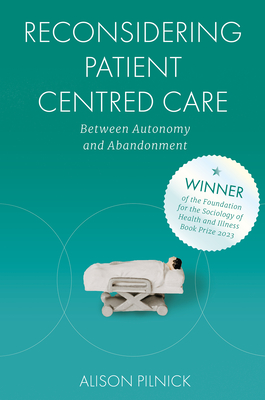
Winner of the Foundation for the Sociology of Health and Illness Book Prize 2023
In a major contribution to the sociology of medicine, Alison Pilnick shifts the terms of the debate around patient centred care (PCC). PCC is typically framed as a moral imperative, necessary to prevent a return to the outmoded medical paternalism of the past. However, empirical research repeatedly fails to show a clear link between the adoption of PCC and improvement in health outcomes. These results are largely considered as professional failings, to be remediated through 'better' training in PCC; as a result empirical research is largely focused on the extent to which practice does not live up to checklists of PCC criteria.
Through the detailed examination of a large corpus of healthcare interactions collected from a range of settings over a 25 year period, Pilnick illustrates the ways in which there are good organisational and interactional reasons for what may look from a PCC perspective like 'bad' healthcare practice. Conceptualisations of PCC typically foreground the importance of patient autonomy, to be exercised through choice and control; the analysis presented here highlights the problems with these consumerist underpinnings of PCC, and shows how the interactional consequence of attempting to enact them is often the sidelining of medical expertise that patients want or need.
Arguing that reform would be better directed at considering how this expertise can be re-centred in contemporary healthcare, the analysis illustrates why values-driven policy can be problematic in practice, and points to the importance of using analyses of healthcare interaction to inform healthcare policy making from the outset, rather than simply as a barometer of its success.
Log in to write a review for this book.
No reviews yet. Be the first to share your opinion.
Biography not available.