Ingram, Robert G. Editor
Biography not available.

Browse all FOLKLORE books
Browse all GARDENS books
Browse all GRAPHIC NOVELS books
Browse all HISTORY - MEDIEVAL books
Browse all HUMOUR books
Browse all Juvenile Fiction : Biographical - Other books
Browse all Juvenile Fiction : Historical - Other books
Browse all Juvenile Fiction : Legends, Myths, & Fables - Other books
Browse all Juvenile Fiction : People & Places - Other books
Browse all Juvenile Fiction : People & Places - United States - Other books
Browse all Juvenile Fiction : Religious - Other books
Browse all Juvenile Nonfiction : History - Other books
Browse all Juvenile Nonfiction : Mathematics - Advanced books
Browse all Juvenile Nonfiction : People & Places - Other books
Browse all Juvenile Nonfiction : People & Places - United States - Othe books
Browse all LITERARY STUDIES books
Browse all LONDON books
Browse all Medical : Nursing - Mental Health books
Browse all MIND books
Browse all MUSEOLOGY books
Browse all NON-CLASSIFIABLE books
Browse all NONLINEAR SCIENCE books
Browse all POPULAR SCIENCE books
Browse all RELIGIOUS STUDIES books
Browse all SPIRIT books
Browse all SPORT books
Browse all TRAVEL WRITING books
 Out of Stock
Paperback · ISBN 9781837651986
Inclusive of GST and other taxes
Arriving at your doorstep in 10-15 days
Our logisitcs team will make sure everyitem is delivered safely
| ISBN | 9781837651986 |
|---|---|
| Publisher | Boydell Press |
| Publication date | January 2025 |
| Language | English |
| MRP | £29.99 GBP |
| Page count | 330 |
| Item weight | 103 g |
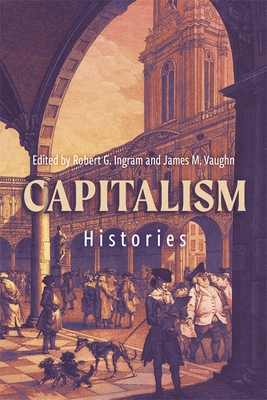
This book re-examines the historical emergence and evolution of capitalism. Why did a radically new way of organizing economic life emerge in regions of the early modern world? Why did it eventually encompass the globe, tying the peoples of the world together in a common economic fate? These questions have been at the heart of historical and social-scientific inquiry since the nineteenth century. They are explored and answered anew by the scholars gathered together in this geographically and theoretically capacious volume. The chapters explore the emergence and development of capitalism in Africa, Western Europe, Eastern Europe, South Asia, East Asia, North America, and the Atlantic world, and they engage with many of the major intellectual approaches for understanding capitalism, from the New Institutional Economics to world-systems theory.
The authors share a common commitment, but not a common approach, to understanding the historical development of capitalism. They believe that the emergence and evolution of capitalism must be understood by examining the concrete conditions of socioeconomic life in a particular country, empire, or region, and that such empirically and archivally driven historical analysis must be combined with theoretical discussion of the concepts and categories used to make sense of capitalism and its dynamics.
This work offers different accounts of capitalist development across and within major regions of the world. It is a histories of, rather than a history of, capitalism. As such, it introduces readers to new historical research on capitalist development in different regional and national contexts and to several significant intellectual approaches for understanding what Max Weber called "the most fateful force of our modern life."
Log in to write a review for this book.
No reviews yet. Be the first to share your opinion.
Biography not available.
Biography not available.
Biography not available.