Nobbs, Gilbert Author
Biography not available.

Browse all FOLKLORE books
Browse all GARDENS books
Browse all GRAPHIC NOVELS books
Browse all HISTORY - MEDIEVAL books
Browse all HUMOUR books
Browse all Juvenile Fiction : Biographical - Other books
Browse all Juvenile Fiction : Historical - Other books
Browse all Juvenile Fiction : Legends, Myths, & Fables - Other books
Browse all Juvenile Fiction : People & Places - Other books
Browse all Juvenile Fiction : People & Places - United States - Other books
Browse all Juvenile Fiction : Religious - Other books
Browse all Juvenile Nonfiction : History - Other books
Browse all Juvenile Nonfiction : Mathematics - Advanced books
Browse all Juvenile Nonfiction : People & Places - Other books
Browse all Juvenile Nonfiction : People & Places - United States - Othe books
Browse all LITERARY STUDIES books
Browse all LONDON books
Browse all Medical : Nursing - Mental Health books
Browse all MIND books
Browse all MUSEOLOGY books
Browse all NON-CLASSIFIABLE books
Browse all NONLINEAR SCIENCE books
Browse all POPULAR SCIENCE books
Browse all RELIGIOUS STUDIES books
Browse all SPIRIT books
Browse all SPORT books
Browse all TRAVEL WRITING books
 Out of Stock
ENGLISHMAN KAMERAD REV/E
Paperback · ISBN 9781845741693
Inclusive of GST and other taxes
Arriving at your doorstep in 10-15 days
Our logisitcs team will make sure everyitem is delivered safely
| ISBN | 9781845741693 |
|---|---|
| Subtitle | ENGLISHMAN KAMERAD REV/E |
| Publisher | Naval & Military Press |
| Publication date | February 2005 |
| Language | English |
| MRP | £9.50 GBP |
| Page count | 228 |
| Item weight | 51 g |
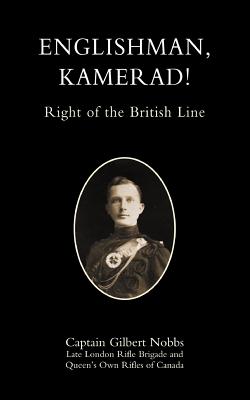
The author sums up the record of his experiences in the Great War in one sentence in the introduction: five weeks in the firing line, four weeks mourned as dead, and three months a prisoner of war. Nobbs served in the ranks of the 5th Battalion the London Regiment (London Rifle Brigade) for some years before the war, then went to Canada where he obtained a commission in the Queen's Own Rifles. He resigned and came home in 1914 and rejoined the LRB as a captain. At first he was with the second line battalion - 2/5th - and then transferred to the 3/5th before being posted to the 1/5th in France (169 Brigade/56 Division). He joined the battalion in the first week of August 1916 when it was in rest billets at St Amand, and moved with it to the Somme on 2 Sep 1916. The first few chapters describe his early impressions. It was only a week later, on 9 September, that Nobbs was blinded during an attack on Leuze (Lousy) Wood. A bullet entered his left temple and came out through the centre of his right eye. This part of the book is very descriptive of fighting - Valley of death, Falfemont (Faffemont) Farm and Leuze Wood. His account of lying blinded in a shell hole while the battle went on around him, his being found and taken prisoner, his treatment is very moving and vivid. The final part deals with his experience in a hospital in Hanover and a PW camp in Osnabruck. His next of kin had been notified he had been killed in action, had received a telegram of sympathy from the Palace and his name had appeared in the Obituaries and his solicitors processed his estate. It was a month before the truth was revealed. Capt Nobbs was repatriated on 9 Dec 1916. The final touch comes in the last sentence of the book. Back home he received a letter from his solicitor containing an account: "To services rendered in connexion with the death of Captain Nobbs!"
Log in to write a review for this book.
No reviews yet. Be the first to share your opinion.
Biography not available.
Biography not available.