Breeding, J, Author
Biography not available.

Browse all FOLKLORE books
Browse all GARDENS books
Browse all GRAPHIC NOVELS books
Browse all HISTORY - MEDIEVAL books
Browse all HUMOUR books
Browse all Juvenile Fiction : Biographical - Other books
Browse all Juvenile Fiction : Historical - Other books
Browse all Juvenile Fiction : Legends, Myths, & Fables - Other books
Browse all Juvenile Fiction : People & Places - Other books
Browse all Juvenile Fiction : People & Places - United States - Other books
Browse all Juvenile Fiction : Religious - Other books
Browse all Juvenile Nonfiction : History - Other books
Browse all Juvenile Nonfiction : Mathematics - Advanced books
Browse all Juvenile Nonfiction : People & Places - Other books
Browse all Juvenile Nonfiction : People & Places - United States - Othe books
Browse all LITERARY STUDIES books
Browse all LONDON books
Browse all Medical : Nursing - Mental Health books
Browse all MIND books
Browse all MUSEOLOGY books
Browse all NON-CLASSIFIABLE books
Browse all NONLINEAR SCIENCE books
Browse all POPULAR SCIENCE books
Browse all RELIGIOUS STUDIES books
Browse all SPIRIT books
Browse all SPORT books
Browse all TRAVEL WRITING books
 Out of Stock
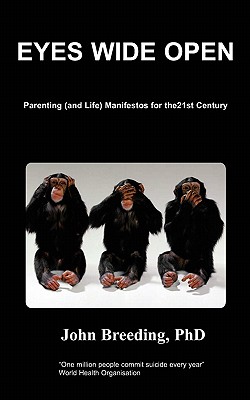
EYES WIDE OPEN
Paperback · ISBN 9781847471147
Inclusive of GST and other taxes
Arriving at your doorstep in 10-15 days
Our logisitcs team will make sure everyitem is delivered safely
| ISBN | 9781847471147 |
|---|---|
| Subtitle | EYES WIDE OPEN |
| Publisher | Chipmunkapublishing |
| Publication date | February 2007 |
| Language | English |
| MRP | £10.00 GBP |
| Page count | 84 |
| Item weight | 22 g |
ISBN: 9781847471147
Published: 2007
Pages: 80
Key Themes: anti-psychiatry, empowerment, mental health services, North American author
Description
This book addresses the vulnerability of human life. It looks at how early life experiences can affect people psychologically. It is extremely informative.
About the Author
Prof. John Breeding is a father of two from Texas, USA, he was born in 1952. He is a psychology professor who became aware of the problem of modern psychiatry whilst working in mental health services. He always intended to become a Catholic priest until his teens, this would account for the 'spiritual' aspect of his thinking. He is extremely active in campaigning on the negative effects that prescribed medication can have on youngsters in the US.
Book Extract
A Second Manifesto for the 21st Century
A full three decades ago, I learned something in my class on infant psychology at a major university.
The professor was great-ardent and intelligent, trained at the University of Minnesota Child Development Center, one of the most prestigious university spots in the academic world of child development. He was actively involved in researching infant life and experience. I learned that newborns could not focus their eyes for a while after birth, a couple of days more or less. I accepted this along with all kinds of other valuable information in my quest to understand life, my life in particular.
That was 1974. Twelve years later, on August 31, 1986, I learned that my newborn son was intensely focused immediately upon entry from his mother's womb into the world of air-eyes wide open, intense, and appearing angry after a very difficult struggle to get his big head through mother's cervix. I, too, was wide open after one of the most awesome peak experiences of my life.
Eighteen years later, in 2004, I met one of my teachers for the first time, and heard a sentence that gave me a clear way to think about this business of focusing infants and other "things I learned at school."
Thomas Szasz is the finest master of language and logic that I have met, particularly excelling in the art of creating aphorisms-short, pithy statements of truth. This day I listened to him speak on his chosen vocation, articulating the truth about psychiatry and our so-called mental health system. Dr. Szasz quoted American humorist Josh Billings' quip that, "The problem is not that people don't know anything, it's that they know so many things that ain't so!" (I have later learned from Leonard Roy Frank, editor of Random House Webster's Quotationary, that this aphorism more likely came from Artemus Ward, who said that, "It's not so much what folks don't know that causes problems, it's what they do know that ain't so.")
This essay is an effort to answer the question of how people know so much that ain't so, and live in denial about what is. It is also a sequel to my first manifesto, written three years ago as a chapter in my book, True Nature and Great Misunderstandings, titled "A 21 st Century Manifesto for Parenting."
Log in to write a review for this book.
No reviews yet. Be the first to share your opinion.
Biography not available.