Patt, Anthony Editor
Biography not available.

Browse all FOLKLORE books
Browse all GARDENS books
Browse all GRAPHIC NOVELS books
Browse all HISTORY - MEDIEVAL books
Browse all HUMOUR books
Browse all Juvenile Fiction : Biographical - Other books
Browse all Juvenile Fiction : Historical - Other books
Browse all Juvenile Fiction : Legends, Myths, & Fables - Other books
Browse all Juvenile Fiction : People & Places - Other books
Browse all Juvenile Fiction : People & Places - United States - Other books
Browse all Juvenile Fiction : Religious - Other books
Browse all Juvenile Nonfiction : History - Other books
Browse all Juvenile Nonfiction : Mathematics - Advanced books
Browse all Juvenile Nonfiction : People & Places - Other books
Browse all Juvenile Nonfiction : People & Places - United States - Othe books
Browse all LITERARY STUDIES books
Browse all LONDON books
Browse all Medical : Nursing - Mental Health books
Browse all MIND books
Browse all MUSEOLOGY books
Browse all NON-CLASSIFIABLE books
Browse all NONLINEAR SCIENCE books
Browse all POPULAR SCIENCE books
Browse all RELIGIOUS STUDIES books
Browse all SPIRIT books
Browse all SPORT books
Browse all TRAVEL WRITING books
 Out of Stock
Paperback · ISBN 9781849711548
Inclusive of GST and other taxes
Arriving at your doorstep in 10-15 days
Our logisitcs team will make sure everyitem is delivered safely
| ISBN | 9781849711548 |
|---|---|
| Publisher | Routledge |
| Publication date | October 2010 |
| Language | English |
| MRP | £46.99 GBP |
| Page count | 286 |
| Item weight | 89 g |
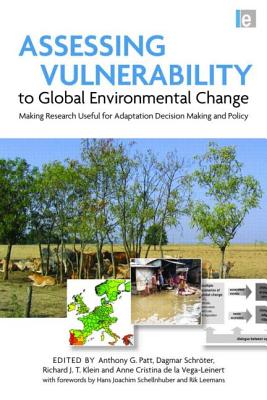
Assessing the vulnerability of human populations to global environmental change, particularly climate change, is now the main imperative of research and international action. However, much of the research into vulnerability is not designed to feed directly into decision making and policy, creating a gap between the knowledge created by researchers and what is required by decision makers.
This book seeks to rectify this problem and bridge the gap. It discusses vulnerability as the central theme and brings together many different applications from disaster studies, climate change impact studies and several other fields and provides the most comprehensive synthesis of definitions, theories, formalization and applications to date, illustrated with examples from different disciplines, regions and periods, and from local through to regional, national and international levels.
Case study topics cover sea level rise, vulnerability to changes in ecosystem services, assessing the vulnerability of human health and 'double exposure' to climate change and trade liberalization amongst other issues. Research outcomes stress that science-policy dialogues must be transparent to be effective and concentrate on a mutual understanding of the concepts used. A key research finding is that the most useful information for decision makers is that which shows the separate causes and drivers of vulnerability, rather than presenting vulnerability in an aggregated form. The book concludes with a unifying framework for analysing integrated methodologies of vulnerability assessment and guiding how research and policy can be linked to reduce vulnerability.
Log in to write a review for this book.
No reviews yet. Be the first to share your opinion.
Biography not available.
Biography not available.
Biography not available.