Kendle, Alan Author
Biography not available.

Browse all FOLKLORE books
Browse all GARDENS books
Browse all GRAPHIC NOVELS books
Browse all HISTORY - MEDIEVAL books
Browse all HUMOUR books
Browse all Juvenile Fiction : Biographical - Other books
Browse all Juvenile Fiction : Historical - Other books
Browse all Juvenile Fiction : Legends, Myths, & Fables - Other books
Browse all Juvenile Fiction : People & Places - Other books
Browse all Juvenile Fiction : People & Places - United States - Other books
Browse all Juvenile Fiction : Religious - Other books
Browse all Juvenile Nonfiction : History - Other books
Browse all Juvenile Nonfiction : Mathematics - Advanced books
Browse all Juvenile Nonfiction : People & Places - Other books
Browse all Juvenile Nonfiction : People & Places - United States - Othe books
Browse all LITERARY STUDIES books
Browse all LONDON books
Browse all Medical : Nursing - Mental Health books
Browse all MIND books
Browse all MUSEOLOGY books
Browse all NON-CLASSIFIABLE books
Browse all NONLINEAR SCIENCE books
Browse all POPULAR SCIENCE books
Browse all RELIGIOUS STUDIES books
Browse all SPIRIT books
Browse all SPORT books
Browse all TRAVEL WRITING books
 Out of Stock
Paperback · ISBN 9781911121428
Inclusive of GST and other taxes
Arriving at your doorstep in 10-15 days
Our logisitcs team will make sure everyitem is delivered safely
| ISBN | 9781911121428 |
|---|---|
| Publisher | Dark River |
| Publication date | November 2017 |
| Language | English |
| MRP | £12.99 GBP |
| Page count | 172 |
| Item weight | 53 g |
Close your eyes and picture a sunrise.
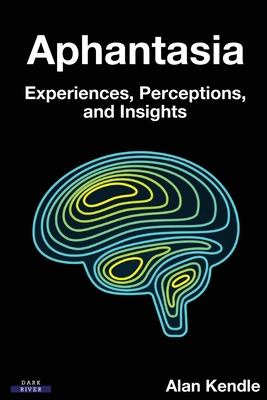
For the majority of people, the ability to visualize images - such as a sunrise - seems straightforward, and can be accomplished 'on demand'. But, for potentially some 2% of the population, conjuring up an image in one's mind's eye is not possible; attempts to visualize images just bring up darkness.
Although identified back in the 19th century, Aphantasia remained under the radar for more than a century, and it was not until recently that it has been rediscovered and re-examined. It has become clear that Aphantasia is a fascinating and often idiosyncratic condition, and typically more complex than the simple absence of an ability to visualize. People with the condition - Aphants - commonly report effects upon their abilities to recreate sounds, smells and touches as well; many also struggle with facial recognition. Paradoxically, many Aphants report that when they sleep, their dreams incorporate colour images, sound, and the other senses.
Put together by lead author Alan Kendle - who discovered his Aphantasia in 2016 - this title is a collection of insights from contributors across the world detailing their lives with the condition. It offers rich, diverse, and often amusing insights and experiences into Aphantasia's effects. For anyone who wishes to understand this most intriguing condition better, the book provides a wonderful and succinct starting point.
Foreword by Professor Adam Zeman, Professor of Cognitive and Behavioural Neurology, University of Exeter
Log in to write a review for this book.
No reviews yet. Be the first to share your opinion.
Biography not available.
Biography not available.