Rehn, Akasha Author
Biography not available.

Browse all FOLKLORE books
Browse all GARDENS books
Browse all GRAPHIC NOVELS books
Browse all HISTORY - MEDIEVAL books
Browse all HUMOUR books
Browse all Juvenile Fiction : Biographical - Other books
Browse all Juvenile Fiction : Historical - Other books
Browse all Juvenile Fiction : Legends, Myths, & Fables - Other books
Browse all Juvenile Fiction : People & Places - Other books
Browse all Juvenile Fiction : People & Places - United States - Other books
Browse all Juvenile Fiction : Religious - Other books
Browse all Juvenile Nonfiction : History - Other books
Browse all Juvenile Nonfiction : Mathematics - Advanced books
Browse all Juvenile Nonfiction : People & Places - Other books
Browse all Juvenile Nonfiction : People & Places - United States - Othe books
Browse all LITERARY STUDIES books
Browse all LONDON books
Browse all Medical : Nursing - Mental Health books
Browse all MIND books
Browse all MUSEOLOGY books
Browse all NON-CLASSIFIABLE books
Browse all NONLINEAR SCIENCE books
Browse all POPULAR SCIENCE books
Browse all RELIGIOUS STUDIES books
Browse all SPIRIT books
Browse all SPORT books
Browse all TRAVEL WRITING books
 Out of Stock
Paperback · ISBN 9781919351728
Inclusive of GST and other taxes
Arriving at your doorstep in 10-15 days
Our logisitcs team will make sure everyitem is delivered safely
| ISBN | 9781919351728 |
|---|---|
| Publisher | Rhubarb Bridge Publishing |
| Publication date | January 2026 |
| Language | English |
| MRP | £14.99 GBP |
| Page count | 146 |
| Item weight | 59 g |
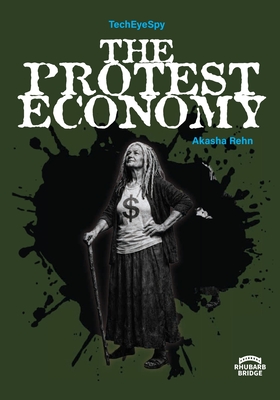
Protest is usually framed as a moral act or a political gesture. This book treats it as something else.
The Protest Economy examines protest and mass mobilisation as economic systems. It asks how people are mobilised at scale, how participation is sustained over time, how costs are distributed, and how incentives shape behaviour once protest becomes persistent rather than exceptional.
Drawing on economics, political economy, and historical case studies, the book traces protest from ancient societies to the modern era, showing how collective action functions when formal institutions fail to absorb conflict. It explores logistics, coordination, signalling, funding structures, legal exposure, and the limits of sustained mobilisation.
Rather than judging legitimacy or ideology, this book describes mechanisms. It explains why payment is a blunt and risky tool, why indirect incentives matter more than direct compensation, and why the long-term consequences of persistent protest tend to fall unevenly on participants, organisers, and institutions.
Written for academic readers, policymakers, analysts, and serious general readers, The Protest Economy provides a framework for understanding protest as an economic force rather than a rhetorical one.
This paperback edition is designed for extended reading and reference.
Log in to write a review for this book.
No reviews yet. Be the first to share your opinion.
Biography not available.
Biography not available.