Thomas Dittrich Author
Biography not available.

Browse all FOLKLORE books
Browse all GARDENS books
Browse all GRAPHIC NOVELS books
Browse all HISTORY - MEDIEVAL books
Browse all HUMOUR books
Browse all Juvenile Fiction : Biographical - Other books
Browse all Juvenile Fiction : Historical - Other books
Browse all Juvenile Fiction : Legends, Myths, & Fables - Other books
Browse all Juvenile Fiction : People & Places - Other books
Browse all Juvenile Fiction : People & Places - United States - Other books
Browse all Juvenile Fiction : Religious - Other books
Browse all Juvenile Nonfiction : History - Other books
Browse all Juvenile Nonfiction : Mathematics - Advanced books
Browse all Juvenile Nonfiction : People & Places - Other books
Browse all Juvenile Nonfiction : People & Places - United States - Othe books
Browse all LITERARY STUDIES books
Browse all LONDON books
Browse all Medical : Nursing - Mental Health books
Browse all MIND books
Browse all MUSEOLOGY books
Browse all NON-CLASSIFIABLE books
Browse all NONLINEAR SCIENCE books
Browse all POPULAR SCIENCE books
Browse all RELIGIOUS STUDIES books
Browse all SPIRIT books
Browse all SPORT books
Browse all TRAVEL WRITING books
 Out of Stock
Paperback · ISBN 9781944659981
Inclusive of GST and other taxes
Arriving at your doorstep in 2-3 days
Our logisitcs team will make sure everyitem is delivered safely
| ISBN | 9781944659981 |
|---|---|
| Publisher | World Scientific |
| Language | English |
| Page count | 568 |
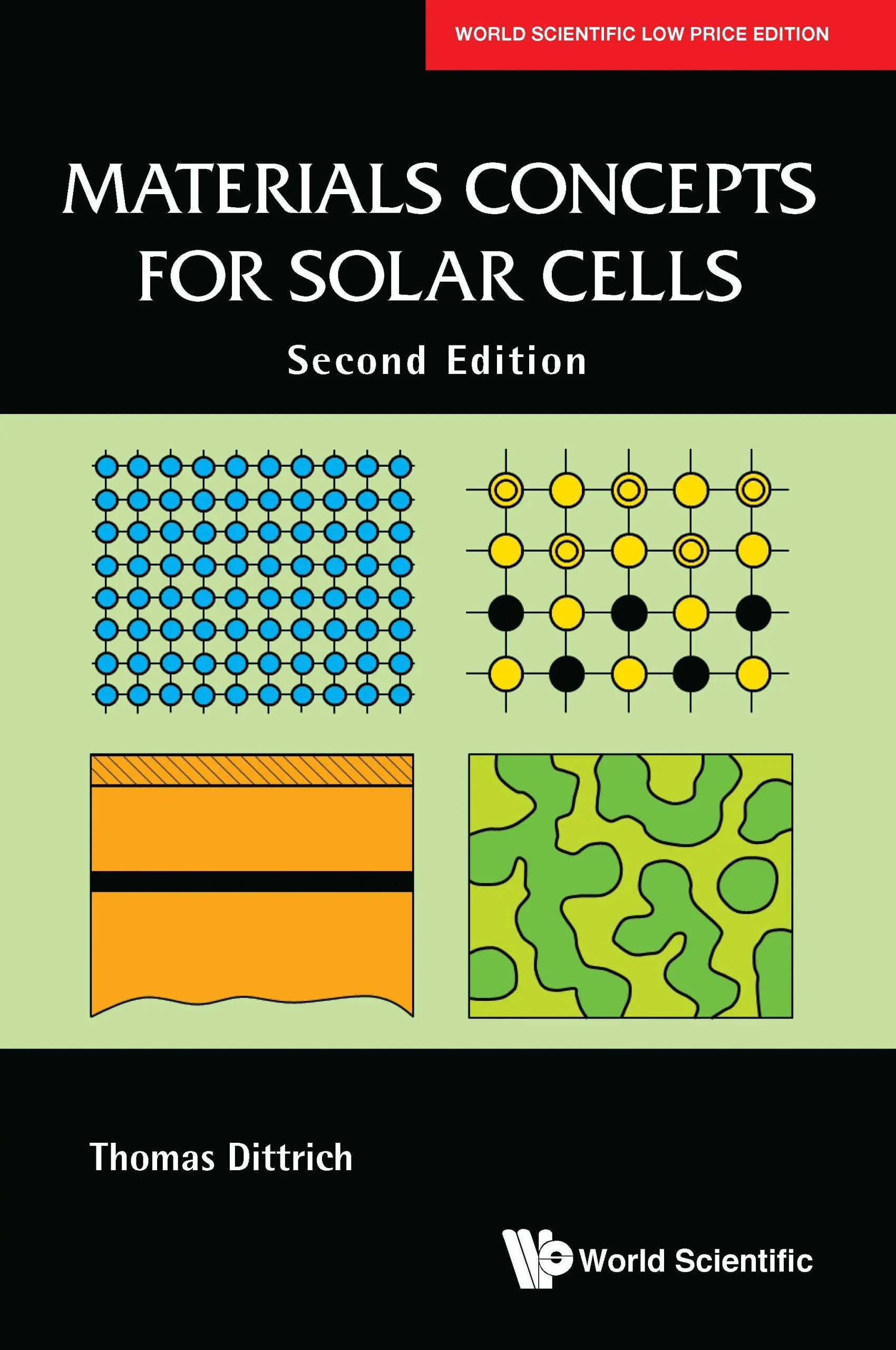
A modern challenge is for solar cell materials to enable the highest solar energy conversion efficiencies, at costs as low as possible, and at an energy balance as sustainable as necessary in the future. This textbook explains the principles, concepts and materials used in solar cells. It combines basic knowledge about solar cells and the demanded criteria for the materials with a comprehensive introduction into each of the four classes of materials for solar cells, i.e. solar cells based on crystalline silicon, epitaxial layer systems of III-V semiconductors, thin-film absorbers on foreign substrates, and nano-composite absorbers. In this sense, it bridges a gap between basic literature on the physics of solar cells and books specialized on certain types of solar cells.The last five years had several breakthroughs in photovoltaics and in the research on solar cells and solar cell materials. We consider them in this second edition. For example, the high potential of crystalline silicon with charge-selective hetero-junctions and alkaline treatments of thin-film absorbers, based on chalcopyrite, enabled new records. Research activities were boosted by the class of hybrid organic-inorganic metal halide perovskites, a promising newcomer in the field.This is essential reading for students interested in solar cells and materials for solar cells. It encourages students to solve tasks at the end of each chapter. It has been well applied for postgraduate students with background in materials science, engineering, chemistry or physics.
Log in to write a review for this book.
No reviews yet. Be the first to share your opinion.
Biography not available.