Fonseca, Jorge Carlos Author
Biography not available.

Browse all FOLKLORE books
Browse all GARDENS books
Browse all GRAPHIC NOVELS books
Browse all HISTORY - MEDIEVAL books
Browse all HUMOUR books
Browse all Juvenile Fiction : Biographical - Other books
Browse all Juvenile Fiction : Historical - Other books
Browse all Juvenile Fiction : Legends, Myths, & Fables - Other books
Browse all Juvenile Fiction : People & Places - Other books
Browse all Juvenile Fiction : People & Places - United States - Other books
Browse all Juvenile Fiction : Religious - Other books
Browse all Juvenile Nonfiction : History - Other books
Browse all Juvenile Nonfiction : Mathematics - Advanced books
Browse all Juvenile Nonfiction : People & Places - Other books
Browse all Juvenile Nonfiction : People & Places - United States - Othe books
Browse all LITERARY STUDIES books
Browse all LONDON books
Browse all Medical : Nursing - Mental Health books
Browse all MIND books
Browse all MUSEOLOGY books
Browse all NON-CLASSIFIABLE books
Browse all NONLINEAR SCIENCE books
Browse all POPULAR SCIENCE books
Browse all RELIGIOUS STUDIES books
Browse all SPIRIT books
Browse all SPORT books
Browse all TRAVEL WRITING books
 Out of Stock
Paperback · ISBN 9781947322165
Inclusive of GST and other taxes
Arriving at your doorstep in 5-7 days
Our logisitcs team will make sure everyitem is delivered safely
| ISBN | 9781947322165 |
|---|---|
| Publisher | Insert Press |
| Publication date | May 2025 |
| Language | English |
| MRP | £16.00 GBP |
| Page count | 178 |
| Item weight | 47 g |
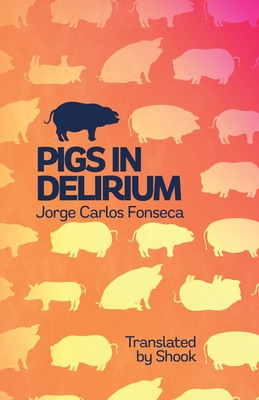
First published in Cabo Verde in 1998, Jorge Carlos Fonseca's Pigs in Delirium (Porcos em Delírio) charted and continues to chart a new vision not just for Cabo-Verdean poetry, but for all of Lusophone poetry. Pigs in Delirium begins with a 10-page biographical timeline of the allegedly deceased author's life, compiled by an old enemy turned posthumous admirer. The grandiose, surreal, and self-deprecating document includes recognizable elements from Jorge Carlos Fonseca's known biography alongside a fantastical and metaphysical one. Spicerian in tone, it recounts the poet's strange birth, several body parts at a time, over the course of his first 19 years; a 27-day argument with René Char, already long dead, over the best title for the book; and even a failed heist of the Louvre.
Paginated in reverse, Fonseca's poems sprawl across multiple pages, sometimes crossed out by large Xs. Though they read from top to bottom their typesetting from the bottom margin upward suggests levitation or the rising of a tropical mist. As these innovations suggest, Porcos em Delírio is not an "easy" book. Fonseca delights in difficulty-Joyce being another influence cited by fellow poet Arménio Vieira-and reflects this pleasure in a playful intellectualism that can at times approach the abstruse. Indeed, a perfect understanding of the poems may not be merely impossible but beside the point. And yet the book remains as legible as it is imagistic, lyrical, and hyper-referential.
In this, the strangest book of Lusophone African literature, the poet devours and regurgitates influences from Breton to Buñuel, Ginsberg to Garbarek, with a recurring fondness for Archie Shepp, occasional incursions of Kriolu wordplay, and a talent for mimicking (and skewering) the language of postcolonial island politics. This searing skepticism of overwrought political language is run through with Utopian faith in the power of poetry. Pigs in Delirium marks the English-language debut of an essential postcolonial African voice.
Log in to write a review for this book.
No reviews yet. Be the first to share your opinion.
Biography not available.
Biography not available.