Aesop Author
Biography not available.

Browse all FOLKLORE books
Browse all GARDENS books
Browse all GRAPHIC NOVELS books
Browse all HISTORY - MEDIEVAL books
Browse all HUMOUR books
Browse all Juvenile Fiction : Biographical - Other books
Browse all Juvenile Fiction : Historical - Other books
Browse all Juvenile Fiction : Legends, Myths, & Fables - Other books
Browse all Juvenile Fiction : People & Places - Other books
Browse all Juvenile Fiction : People & Places - United States - Other books
Browse all Juvenile Fiction : Religious - Other books
Browse all Juvenile Nonfiction : History - Other books
Browse all Juvenile Nonfiction : Mathematics - Advanced books
Browse all Juvenile Nonfiction : People & Places - Other books
Browse all Juvenile Nonfiction : People & Places - United States - Othe books
Browse all LITERARY STUDIES books
Browse all LONDON books
Browse all Medical : Nursing - Mental Health books
Browse all MIND books
Browse all MUSEOLOGY books
Browse all NON-CLASSIFIABLE books
Browse all NONLINEAR SCIENCE books
Browse all POPULAR SCIENCE books
Browse all RELIGIOUS STUDIES books
Browse all SPIRIT books
Browse all SPORT books
Browse all TRAVEL WRITING books
 Out of Stock
Paperback · ISBN 9782322171194
Inclusive of GST and other taxes
Arriving at your doorstep in 10-15 days
Our logisitcs team will make sure everyitem is delivered safely
| ISBN | 9782322171194 |
|---|---|
| Publisher | BoD - Books on Demand |
| Publication date | March 2019 |
| Language | English |
| MRP | £36.90 GBP |
| Page count | 580 |
| Item weight | 138 g |
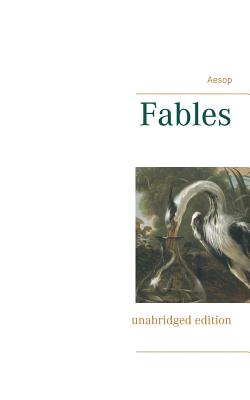
Aesop's Fables, or the Aesopica, is a collection of fables credited to Aesop, a slave and storyteller believed to have lived in ancient Greece between 620 and 564 BCE. Of diverse origins, the stories associated with his name have descended to modern times through a number of sources and continue to be reinterpreted in different verbal registers and in popular as well as artistic media. The fables originally belonged to the oral tradition and were not collected for some three centuries after Aesop's death. By that time a variety of other stories, jokes and proverbs were being ascribed to him, although some of that material was from sources earlier than him or came from beyond the Greek cultural sphere. The process of inclusion has continued until the present, with some of the fables unrecorded before the later Middle Ages and others arriving from outside Europe. The process is continuous and new stories are still being added to the Aesop corpus, even when they are demonstrably more recent work and sometimes from known authors. Manuscripts in Latin and Greek were important avenues of transmission, although poetical treatments in European vernaculars eventually formed another. On the arrival of printing, collections of Aesop's fables were among the earliest books in a variety of languages. Through the means of later collections, and translations or adaptations of them, Aesop's reputation as a fabulist was transmitted throughout the world. Initially the fables were addressed to adults and covered religious, social and political themes. They were also put to use as ethical guides and from the Renaissance onwards were particularly used for the education of children. Their ethical dimension was reinforced in the adult world through depiction in sculpture, painting and other illustrative means, as well as adaptation to drama and song. In addition, there have been reinterpretations of the meaning of fables and changes in emphasis over time.
Log in to write a review for this book.
No reviews yet. Be the first to share your opinion.
Biography not available.