Mondal, Tapan K. Editor
Biography not available.

Browse all FOLKLORE books
Browse all GARDENS books
Browse all GRAPHIC NOVELS books
Browse all HISTORY - MEDIEVAL books
Browse all HUMOUR books
Browse all Juvenile Fiction : Biographical - Other books
Browse all Juvenile Fiction : Historical - Other books
Browse all Juvenile Fiction : Legends, Myths, & Fables - Other books
Browse all Juvenile Fiction : People & Places - Other books
Browse all Juvenile Fiction : People & Places - United States - Other books
Browse all Juvenile Fiction : Religious - Other books
Browse all Juvenile Nonfiction : History - Other books
Browse all Juvenile Nonfiction : Mathematics - Advanced books
Browse all Juvenile Nonfiction : People & Places - Other books
Browse all Juvenile Nonfiction : People & Places - United States - Othe books
Browse all LITERARY STUDIES books
Browse all LONDON books
Browse all Medical : Nursing - Mental Health books
Browse all MIND books
Browse all MUSEOLOGY books
Browse all NON-CLASSIFIABLE books
Browse all NONLINEAR SCIENCE books
Browse all POPULAR SCIENCE books
Browse all RELIGIOUS STUDIES books
Browse all SPIRIT books
Browse all SPORT books
Browse all TRAVEL WRITING books
 Out of Stock
Paperback · ISBN 9783030101442
Inclusive of GST and other taxes
Arriving at your doorstep in 10-15 days
Our logisitcs team will make sure everyitem is delivered safely
| ISBN | 9783030101442 |
|---|---|
| Publisher | Springer |
| Publication date | December 2018 |
| Language | English |
| MRP | £149.99 GBP |
| Page count | 324 |
| Item weight | 125 g |
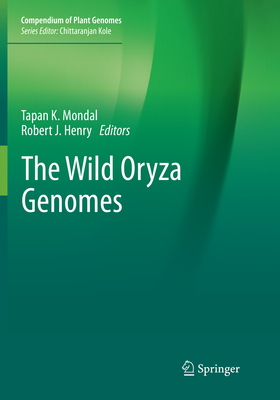
This book focuses on the latest genome sequencing of the 25 wild Oryza species, public and private genomic resources, and their impact on genetic improvement research. It also addresses the untapped reservoir of agronomically important traits in wild Oryza species. Rice is a model crop plant that is frequently used to address several basic questions in plant biology, yet its wild relatives offer an untapped source of agronomically important alleles that are absent in the rice gene pool.
The genus Oryza is extremely diverse, as indicated by a wide range of chromosome numbers, different ploidy levels and genome sizes. After a 13-year gap from the first sequencing of rice in the 2002, the genomes of 11 wild Oryza species have now been sequenced and more will follow. These vast genomic resources are extremely useful for addressing several basic questions on the origin of the genus, evolutionary relationships between the species, domestication, and environmental adaptation, and also help to substantiate molecular breeding and pre-breeding work to introgress useful characters horizontally from wild species into cultivated rice.
Log in to write a review for this book.
No reviews yet. Be the first to share your opinion.
Biography not available.
Biography not available.