Corlett, J. Angelo Author
Biography not available.

Browse all FOLKLORE books
Browse all GARDENS books
Browse all GRAPHIC NOVELS books
Browse all HISTORY - MEDIEVAL books
Browse all HUMOUR books
Browse all Juvenile Fiction : Biographical - Other books
Browse all Juvenile Fiction : Historical - Other books
Browse all Juvenile Fiction : Legends, Myths, & Fables - Other books
Browse all Juvenile Fiction : People & Places - Other books
Browse all Juvenile Fiction : People & Places - United States - Other books
Browse all Juvenile Fiction : Religious - Other books
Browse all Juvenile Nonfiction : History - Other books
Browse all Juvenile Nonfiction : Mathematics - Advanced books
Browse all Juvenile Nonfiction : People & Places - Other books
Browse all Juvenile Nonfiction : People & Places - United States - Othe books
Browse all LITERARY STUDIES books
Browse all LONDON books
Browse all Medical : Nursing - Mental Health books
Browse all MIND books
Browse all MUSEOLOGY books
Browse all NON-CLASSIFIABLE books
Browse all NONLINEAR SCIENCE books
Browse all POPULAR SCIENCE books
Browse all RELIGIOUS STUDIES books
Browse all SPIRIT books
Browse all SPORT books
Browse all TRAVEL WRITING books
 Out of Stock
Paperback · ISBN 9783030171056
Inclusive of GST and other taxes
Arriving at your doorstep in 10-15 days
Our logisitcs team will make sure everyitem is delivered safely
| ISBN | 9783030171056 |
|---|---|
| Publisher | Springer |
| Publication date | March 2019 |
| Language | English |
| MRP | £27.99 GBP |
| Page count | 260 |
| Item weight | 82 g |
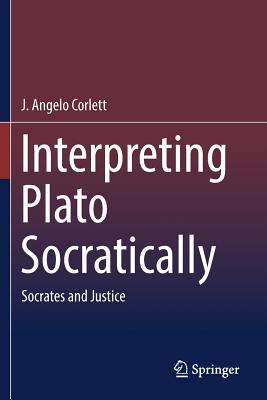
J. Angelo Corlett's new book, Interpreting Plato Socratically continues the critical discussion of the Platonic Question where Corlett's book, Interpreting Plato's Dialogues concluded. New arguments in favor of the Mouthpiece Interpretation of Plato's works are considered and shown to be fallacious, as are new objections to some competing approaches to Plato's works.
The Platonic Question is the problem of how to approach and interpret Plato's writings most of which are dialogues. How, if at all, can Plato's beliefs, doctrines, theories and such be extracted from dialogues where there is no direct indication from Plato that his own views are even to be found therein? Most philosophers of Plato attempt to decipher from Plato's texts seemingly all manner of ideas expressed by Socrates which they then attribute to Plato. They seek to ascribe to Plato particular views about justice, art, love, virtue, knowledge, and the like because, they believe, Socrates is Plato's mouthpiece through the dialogues. But is such an approach justified? What are the arguments in favor of such an approach? Is there a viable alternative approach to Plato's dialogues?
In this rigorous account of the dominant approach to Plato's dialogues, there is no room left for reasonable doubt about the problematic reasons given for the notion that Plato's dialogues reveal either Plato's or Socrates' beliefs, doctrines or theories about substantive philosophical matters.
Corlett's approach to Plato's dialogues is applied to a variety of passages throughout Plato's works on a wide range of topics concerning justice. In-depth discussions of themes such as legal obligation, punishment and compensatory justice are clarified and with some surprising results. Plato's works serve as a rich source of philosophical thinking about such matters.
Log in to write a review for this book.
No reviews yet. Be the first to share your opinion.
Biography not available.