Esfeld, Michael Author
Biography not available.

Browse all FOLKLORE books
Browse all GARDENS books
Browse all GRAPHIC NOVELS books
Browse all HISTORY - MEDIEVAL books
Browse all HUMOUR books
Browse all Juvenile Fiction : Biographical - Other books
Browse all Juvenile Fiction : Historical - Other books
Browse all Juvenile Fiction : Legends, Myths, & Fables - Other books
Browse all Juvenile Fiction : People & Places - Other books
Browse all Juvenile Fiction : People & Places - United States - Other books
Browse all Juvenile Fiction : Religious - Other books
Browse all Juvenile Nonfiction : History - Other books
Browse all Juvenile Nonfiction : Mathematics - Advanced books
Browse all Juvenile Nonfiction : People & Places - Other books
Browse all Juvenile Nonfiction : People & Places - United States - Othe books
Browse all LITERARY STUDIES books
Browse all LONDON books
Browse all Medical : Nursing - Mental Health books
Browse all MIND books
Browse all MUSEOLOGY books
Browse all NON-CLASSIFIABLE books
Browse all NONLINEAR SCIENCE books
Browse all POPULAR SCIENCE books
Browse all RELIGIOUS STUDIES books
Browse all SPIRIT books
Browse all SPORT books
Browse all TRAVEL WRITING books
 Out of Stock
Hardback · ISBN 9783030377700
Inclusive of GST and other taxes
Arriving at your doorstep in 10-15 days
Our logisitcs team will make sure everyitem is delivered safely
| ISBN | 9783030377700 |
|---|---|
| Publisher | Palgrave Macmillan |
| Publication date | January 2020 |
| Language | English |
| MRP | £69.99 GBP |
| Page count | 208 |
| Item weight | 89 g |
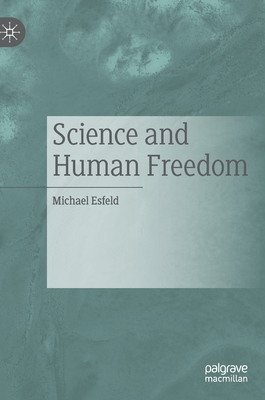
This book argues for two claims: firstly, determinism in science does not infringe upon human free will because it is descriptive, not prescriptive, and secondly, the very formulation, testing and justification of scientific theories presupposes human free will and thereby persons as ontologically primitive. The argument against predetermination is broadly Humean, or more precisely 'Super-Humean', whereas that against naturalist reduction is in large Kantian, drawing from Sellars on the scientific and the manifest image. Thus, whilst the book defends scientific realism against the confusion between fact and fake, it also reveals why scientific theories, laws and explanations cannot succeed in imposing norms for our actions upon us, neither on the level of the individual nor on that of society.
Esfeld makes a strong case for an ontology of science that is minimally sufficient to explain our scientific and common sense knowledge, not only removing theconcern that the laws of nature are incompatible with human freedom, but furthermore showing how our freedom is in fact a very presupposition for science.
Log in to write a review for this book.
No reviews yet. Be the first to share your opinion.
Biography not available.