Marcus, Frederick B. Author
Biography not available.

Browse all FOLKLORE books
Browse all GARDENS books
Browse all GRAPHIC NOVELS books
Browse all HISTORY - MEDIEVAL books
Browse all HUMOUR books
Browse all Juvenile Fiction : Biographical - Other books
Browse all Juvenile Fiction : Historical - Other books
Browse all Juvenile Fiction : Legends, Myths, & Fables - Other books
Browse all Juvenile Fiction : People & Places - Other books
Browse all Juvenile Fiction : People & Places - United States - Other books
Browse all Juvenile Fiction : Religious - Other books
Browse all Juvenile Nonfiction : History - Other books
Browse all Juvenile Nonfiction : Mathematics - Advanced books
Browse all Juvenile Nonfiction : People & Places - Other books
Browse all Juvenile Nonfiction : People & Places - United States - Othe books
Browse all LITERARY STUDIES books
Browse all LONDON books
Browse all Medical : Nursing - Mental Health books
Browse all MIND books
Browse all MUSEOLOGY books
Browse all NON-CLASSIFIABLE books
Browse all NONLINEAR SCIENCE books
Browse all POPULAR SCIENCE books
Browse all RELIGIOUS STUDIES books
Browse all SPIRIT books
Browse all SPORT books
Browse all TRAVEL WRITING books
 Out of Stock
Paperback · ISBN 9783031177132
Inclusive of GST and other taxes
Arriving at your doorstep in 10-15 days
Our logisitcs team will make sure everyitem is delivered safely
| ISBN | 9783031177132 |
|---|---|
| Publisher | Springer |
| Publication date | January 2024 |
| Language | English |
| MRP | £129.99 GBP |
| Page count | 498 |
| Item weight | 153 g |
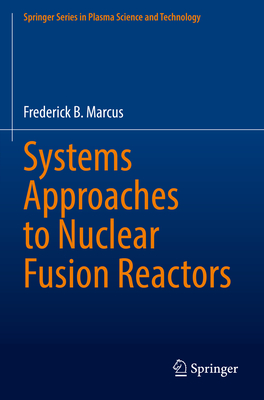
This book offers an overall review, applying systems engineering and architecture approaches, of the design, optimization, operation and results of leading fusion experiments. These approaches provide a unified means of evaluating reactor design. Methodologies are developed for more coherent construction or evaluation of fusion devices, associated experiments and operating procedures. The main focus is on tokamaks, with almost all machines and their important results being integrated into a systems design space. Case studies focus on DIII-D, TCV, JET, WEST, the fusion reactor prototype ITER and the EU DEMO concept. Stellarator, Mirror and Laser inertial confinement experiments are similarly analysed, including reactor implications of breakeven at NIF.
The book examines the engineering and physics design and optimization process for each machine, analysing their performance and major results achieved, thus establishing a basis for the improvement of future machines. The reader will gain a broad historical and up-to-date perspective of the status of nuclear fusion research from both an engineering and physics point of view. Explanations are given of the computational tools needed to design and operate successful experiments and reactor-relevant machines.
This book is aimed at both graduate students and practitioners of nuclear fusion science and engineering, as well as those specializing in other fields demanding large and integrated experimental equipment. Systems engineers will obtain valuable insights into fusion applications. References are given to associated complex mathematical derivations, which are beyond the scope of this book. The general reader interested in nuclear fusion will find here an accessible summary of the current state of nuclear fusion.
Log in to write a review for this book.
No reviews yet. Be the first to share your opinion.
Biography not available.