Cui, Dongmei Editor
Biography not available.

Browse all FOLKLORE books
Browse all GARDENS books
Browse all GRAPHIC NOVELS books
Browse all HISTORY - MEDIEVAL books
Browse all HUMOUR books
Browse all Juvenile Fiction : Biographical - Other books
Browse all Juvenile Fiction : Historical - Other books
Browse all Juvenile Fiction : Legends, Myths, & Fables - Other books
Browse all Juvenile Fiction : People & Places - Other books
Browse all Juvenile Fiction : People & Places - United States - Other books
Browse all Juvenile Fiction : Religious - Other books
Browse all Juvenile Nonfiction : History - Other books
Browse all Juvenile Nonfiction : Mathematics - Advanced books
Browse all Juvenile Nonfiction : People & Places - Other books
Browse all Juvenile Nonfiction : People & Places - United States - Othe books
Browse all LITERARY STUDIES books
Browse all LONDON books
Browse all Medical : Nursing - Mental Health books
Browse all MIND books
Browse all MUSEOLOGY books
Browse all NON-CLASSIFIABLE books
Browse all NONLINEAR SCIENCE books
Browse all POPULAR SCIENCE books
Browse all RELIGIOUS STUDIES books
Browse all SPIRIT books
Browse all SPORT books
Browse all TRAVEL WRITING books
 Out of Stock
Hardback · ISBN 9783031367267
Inclusive of GST and other taxes
Arriving at your doorstep in 10-15 days
Our logisitcs team will make sure everyitem is delivered safely
| ISBN | 9783031367267 |
|---|---|
| Publisher | Springer |
| Publication date | August 2023 |
| Language | English |
| MRP | £159.99 GBP |
| Page count | 224 |
| Item weight | 134 g |
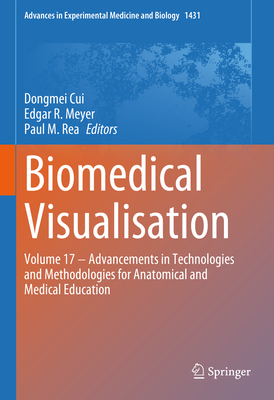
Curricula in the health sciences have undergone significant change and reform in recent years. The time allocated to anatomical education in medical, osteopathic medical, and other health professional programs has largely decreased. As a result, educators are seeking effective teaching tools and useful technology in their classroom learning.
This edited book explores advances in anatomical sciences education, such as teaching methods, integration of systems-based components, course design and implementation, assessments, effective learning strategies in and outside the learning environment, and novel approaches to active learning in and outside the laboratory and classroom. Many of these advances involve computer-based technologies. These technologies include virtual reality, augmented reality, mixed reality, digital dissection tables, digital anatomy apps, three-dimensional (3D) printed models, imaging and 3D reconstruction, virtual microscopy, online teaching platforms, table computers and video recording devices, software programs, and other innovations. Any of these devices and modalities can be used to develop large-class practical guides, small-group tutorials, peer teaching and assessment sessions, and various products and pathways for guided and self-directed learning.
The reader will be able to explore useful information pertaining to a variety of topics incorporating these advances in anatomical sciences education. The book will begin with the exploration of a novel approach to teaching dissection-based anatomy in the context of organ systems and functional compartments, and it will continue with topics ranging from teaching methods and instructional strategies to developing content and guides for selecting effective visualization technologies, especially in lieu of the recent and residual effects of the COVID-19 pandemic. Overall, the book covers several anatomical disciplines, including microscopic anatomy/histology, developmentalanatomy/embryology, gross anatomy, neuroanatomy, radiological imaging, and integrations of clinical correlations.
Log in to write a review for this book.
No reviews yet. Be the first to share your opinion.
Biography not available.
Biography not available.
Biography not available.