Hazelrigg, Lawrence Author
Biography not available.

Browse all FOLKLORE books
Browse all GARDENS books
Browse all GRAPHIC NOVELS books
Browse all HISTORY - MEDIEVAL books
Browse all HUMOUR books
Browse all Juvenile Fiction : Biographical - Other books
Browse all Juvenile Fiction : Historical - Other books
Browse all Juvenile Fiction : Legends, Myths, & Fables - Other books
Browse all Juvenile Fiction : People & Places - Other books
Browse all Juvenile Fiction : People & Places - United States - Other books
Browse all Juvenile Fiction : Religious - Other books
Browse all Juvenile Nonfiction : History - Other books
Browse all Juvenile Nonfiction : Mathematics - Advanced books
Browse all Juvenile Nonfiction : People & Places - Other books
Browse all Juvenile Nonfiction : People & Places - United States - Othe books
Browse all LITERARY STUDIES books
Browse all LONDON books
Browse all Medical : Nursing - Mental Health books
Browse all MIND books
Browse all MUSEOLOGY books
Browse all NON-CLASSIFIABLE books
Browse all NONLINEAR SCIENCE books
Browse all POPULAR SCIENCE books
Browse all RELIGIOUS STUDIES books
Browse all SPIRIT books
Browse all SPORT books
Browse all TRAVEL WRITING books
 Out of Stock
Hardback · ISBN 9783031847776
Inclusive of GST and other taxes
Arriving at your doorstep in 10-15 days
Our logisitcs team will make sure everyitem is delivered safely
| ISBN | 9783031847776 |
|---|---|
| Publisher | Springer |
| Publication date | April 2025 |
| Language | English |
| MRP | £119.99 GBP |
| Page count | 424 |
| Item weight | 170 g |
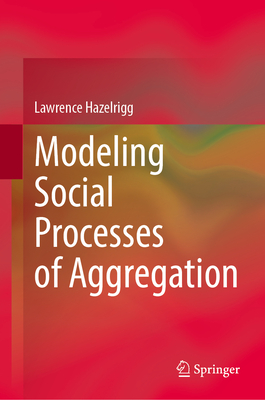
This book demonstrates, via formal statements and empirical illustrations, that nonlinearities in social processes can be modeled systematically to create solutions with practical applications in the institutional forms of paid employment, schooling, and familial relations including marital and kinship ties and the rearing of children. It shows how social processes can be modeled accurately through analyzing time series data-specifically, a temporal sequence of process outcomes that is dense enough in observation time to support appropriate techniques of modeling the outcome sequence. The book illustrates techniques using minimal mathematical formalism which is explained also in careful narrative descriptions of the model logic.
Log in to write a review for this book.
No reviews yet. Be the first to share your opinion.
Biography not available.