Samanidou, Victoria Author
Biography not available.

Browse all FOLKLORE books
Browse all GARDENS books
Browse all GRAPHIC NOVELS books
Browse all HISTORY - MEDIEVAL books
Browse all HUMOUR books
Browse all Juvenile Fiction : Biographical - Other books
Browse all Juvenile Fiction : Historical - Other books
Browse all Juvenile Fiction : Legends, Myths, & Fables - Other books
Browse all Juvenile Fiction : People & Places - Other books
Browse all Juvenile Fiction : People & Places - United States - Other books
Browse all Juvenile Fiction : Religious - Other books
Browse all Juvenile Nonfiction : History - Other books
Browse all Juvenile Nonfiction : Mathematics - Advanced books
Browse all Juvenile Nonfiction : People & Places - Other books
Browse all Juvenile Nonfiction : People & Places - United States - Othe books
Browse all LITERARY STUDIES books
Browse all LONDON books
Browse all Medical : Nursing - Mental Health books
Browse all MIND books
Browse all MUSEOLOGY books
Browse all NON-CLASSIFIABLE books
Browse all NONLINEAR SCIENCE books
Browse all POPULAR SCIENCE books
Browse all RELIGIOUS STUDIES books
Browse all SPIRIT books
Browse all SPORT books
Browse all TRAVEL WRITING books
 Out of Stock
Paperback · ISBN 9783039211586
Inclusive of GST and other taxes
Arriving at your doorstep in 10-15 days
Our logisitcs team will make sure everyitem is delivered safely
| ISBN | 9783039211586 |
|---|---|
| Publisher | MDPI AG |
| Publication date | July 2019 |
| Language | English |
| MRP | £43.00 GBP |
| Page count | 176 |
| Item weight | 86 g |
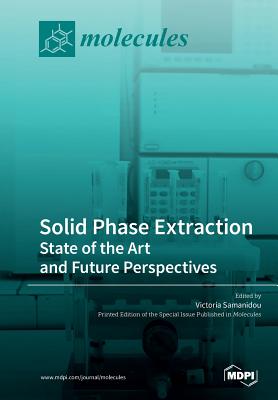
This book is a collection of 13 innovative papers describing the state of the art and the future perspectives in solid-phase extraction covering several analytical fields prior to the use of gas or liquid chromatographic analysis. New sorptive materials are presented including carbon nanohorn suprastructures on paper support, melamine sponge functionalized with urea-formaldehyde co-oligomers, chiral metal-organic frameworks, UiO-66-based metal-organic frameworks, and fabric phase sorptive media for various applications. Solid-phase extraction can be applied in several formats aside from the conventional cartridges or mini-column approach, e.g., online solid-phase extraction, dispersive solid-phase microextraction, and in-syringe micro-solid-phase extraction can be very helpful for analyte pre-concentration and sample clean-up. Polycyclic musks in aqueous samples, 8-Nitroguanine in DNA by chemical derivatization antibacterial diterpenes from the roots of salvia prattii, perfluoroalkyl substances (PFASs) in aater samples by bamboo charcoal-based SPE, parabens in environmental water samples, benzotriazoles as environmental pollutants, organochlorine pesticide residues in various fruit juices and water samples and synthetic peptide purification are among the applications cited in this collection. All these outstanding contributions highlight the necessity of this analytical step, present the advantages and disadvantages of each method and focus on the green analytical chemistry guidelines that have to be fulfilled in current analytical practices.
Log in to write a review for this book.
No reviews yet. Be the first to share your opinion.
Biography not available.