Kwan, Mei-Po Author
Biography not available.

Browse all FOLKLORE books
Browse all GARDENS books
Browse all GRAPHIC NOVELS books
Browse all HISTORY - MEDIEVAL books
Browse all HUMOUR books
Browse all Juvenile Fiction : Biographical - Other books
Browse all Juvenile Fiction : Historical - Other books
Browse all Juvenile Fiction : Legends, Myths, & Fables - Other books
Browse all Juvenile Fiction : People & Places - Other books
Browse all Juvenile Fiction : People & Places - United States - Other books
Browse all Juvenile Fiction : Religious - Other books
Browse all Juvenile Nonfiction : History - Other books
Browse all Juvenile Nonfiction : Mathematics - Advanced books
Browse all Juvenile Nonfiction : People & Places - Other books
Browse all Juvenile Nonfiction : People & Places - United States - Othe books
Browse all LITERARY STUDIES books
Browse all LONDON books
Browse all Medical : Nursing - Mental Health books
Browse all MIND books
Browse all MUSEOLOGY books
Browse all NON-CLASSIFIABLE books
Browse all NONLINEAR SCIENCE books
Browse all POPULAR SCIENCE books
Browse all RELIGIOUS STUDIES books
Browse all SPIRIT books
Browse all SPORT books
Browse all TRAVEL WRITING books
 Out of Stock
Paperback · ISBN 9783039211838
Inclusive of GST and other taxes
Arriving at your doorstep in 10-15 days
Our logisitcs team will make sure everyitem is delivered safely
| ISBN | 9783039211838 |
|---|---|
| Publisher | MDPI AG |
| Publication date | July 2019 |
| Language | English |
| MRP | £69.40 GBP |
| Page count | 382 |
| Item weight | 180 g |
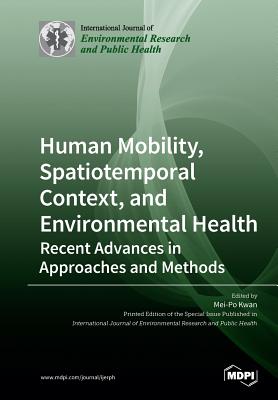
Environmental health researchers have long used concepts like the neighborhood effect to assessing people's exposure to environmental influences and the associated health impact. However, these are static notions that ignore people's daily mobility at various spatial and temporal scales (e.g., daily travel, migratory movements, and movements over the life course) and the influence of neighborhood contexts outside their residential neighborhoods. Recent studies have started to incorporate human mobility, non-residential neighborhoods, and the temporality of exposures through collecting and using data from GPS, accelerometers, mobile phones, various types of sensors, and social media. Innovative approaches and methods have been developed. This Special Issue aims to showcase studies that use new approaches, methods, and data to examine the role of human mobility and non-residential contexts on human health behaviors and outcomes. It includes 21 articles that cover a wide range of topics, including individual exposure to air pollution, exposure and access to green spaces, spatial access to healthcare services, environmental influences on physical activity, food environmental and diet behavior, exposure to noise and its impact on mental health, and broader methodological issues such as the uncertain geographic context problem (UGCoP) and the neighborhood effect averaging problem (NEAP). This collection will be a valuable reference for scholars and students interested in recent advances in the concepts and methods in environmental health and health geography.
Log in to write a review for this book.
No reviews yet. Be the first to share your opinion.
Biography not available.