Manolaraki, Eleni Author
Biography not available.

Browse all FOLKLORE books
Browse all GARDENS books
Browse all GRAPHIC NOVELS books
Browse all HISTORY - MEDIEVAL books
Browse all HUMOUR books
Browse all Juvenile Fiction : Biographical - Other books
Browse all Juvenile Fiction : Historical - Other books
Browse all Juvenile Fiction : Legends, Myths, & Fables - Other books
Browse all Juvenile Fiction : People & Places - Other books
Browse all Juvenile Fiction : People & Places - United States - Other books
Browse all Juvenile Fiction : Religious - Other books
Browse all Juvenile Nonfiction : History - Other books
Browse all Juvenile Nonfiction : Mathematics - Advanced books
Browse all Juvenile Nonfiction : People & Places - Other books
Browse all Juvenile Nonfiction : People & Places - United States - Othe books
Browse all LITERARY STUDIES books
Browse all LONDON books
Browse all Medical : Nursing - Mental Health books
Browse all MIND books
Browse all MUSEOLOGY books
Browse all NON-CLASSIFIABLE books
Browse all NONLINEAR SCIENCE books
Browse all POPULAR SCIENCE books
Browse all RELIGIOUS STUDIES books
Browse all SPIRIT books
Browse all SPORT books
Browse all TRAVEL WRITING books
 Out of Stock
Hardback · ISBN 9783110297676
Inclusive of GST and other taxes
Arriving at your doorstep in 10-15 days
Our logisitcs team will make sure everyitem is delivered safely
| ISBN | 9783110297676 |
|---|---|
| Publisher | De Gruyter |
| Publication date | October 2017 |
| Language | English |
| MRP | £141.50 GBP |
| Page count | 392 |
| Item weight | 160 g |
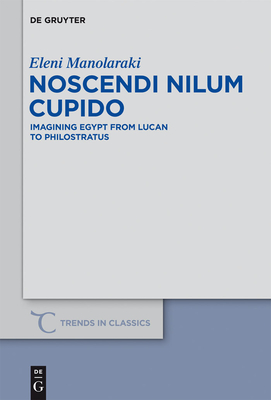
What significations did Egypt have for the Romans a century after Actium and afterwards? How did Greek imperial authors respond to the Roman fascination with the Nile? This book explores Egypt's aftermath beyond the hostility of Augustan rhetoric, and Greek and Roman topoi of Egyptian "barbarism." Set against history and material culture, Julio-Claudian, Flavian, Antonine, and Severan authors reveal a multivalent Egypt that defines Rome's increasingly diffuse identity while remaining a tertium quid between Roman Selfhood and foreign Otherness.
Vespasian's Alexandrian uprising, his recognition of Egypt as his power basis, and his patronage of Isis re-conceptualize Egypt past the ideology of Augustan conquest. The imperialistic exhilaration and moral angst attending Rome's Flavian cosmopolitanism find an expressive means in the geographically and semantically nebulous Nile. The rapprochement with Egypt continues in the second and early third centuries. The "Hellenic" Antonines and the African-Syrian Severans expand perceptions of geography and identity within an increasingly decentralized and diverse empire. In the political and cultural discourses of this period, the capacious symbolics of Egypt validate the empire's religious and ethnic pluralism.
Log in to write a review for this book.
No reviews yet. Be the first to share your opinion.
Biography not available.