No Contributor Author
Biography not available.

Browse all FOLKLORE books
Browse all GARDENS books
Browse all GRAPHIC NOVELS books
Browse all HISTORY - MEDIEVAL books
Browse all HUMOUR books
Browse all Juvenile Fiction : Biographical - Other books
Browse all Juvenile Fiction : Historical - Other books
Browse all Juvenile Fiction : Legends, Myths, & Fables - Other books
Browse all Juvenile Fiction : People & Places - Other books
Browse all Juvenile Fiction : People & Places - United States - Other books
Browse all Juvenile Fiction : Religious - Other books
Browse all Juvenile Nonfiction : History - Other books
Browse all Juvenile Nonfiction : Mathematics - Advanced books
Browse all Juvenile Nonfiction : People & Places - Other books
Browse all Juvenile Nonfiction : People & Places - United States - Othe books
Browse all LITERARY STUDIES books
Browse all LONDON books
Browse all Medical : Nursing - Mental Health books
Browse all MIND books
Browse all MUSEOLOGY books
Browse all NON-CLASSIFIABLE books
Browse all NONLINEAR SCIENCE books
Browse all POPULAR SCIENCE books
Browse all RELIGIOUS STUDIES books
Browse all SPIRIT books
Browse all SPORT books
Browse all TRAVEL WRITING books
 Out of Stock
Hardback · ISBN 9783110311808
Inclusive of GST and other taxes
Arriving at your doorstep in 10-15 days
Our logisitcs team will make sure everyitem is delivered safely
| ISBN | 9783110311808 |
|---|---|
| Publisher | De Gruyter |
| Publication date | June 2014 |
| Language | English |
| MRP | £72.50 GBP |
| Page count | 312 |
| Item weight | 154 g |
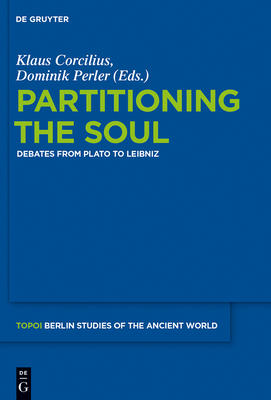
Does the soul have parts? What kind of parts? And how do all the parts make together a whole? Many ancient, medieval and early modern philosophers discussed these questions, thus providing a mereological analysis of the soul. Their starting point was a simple observation: we tend to describe the soul of human beings by referring to different types of activities (perceiving, imagining, thinking, etc.). Each type of activity seems to be produced by a special part of the soul. But how can a simple, undivided soul have parts? Classical thinkers gave radically different answers to this question. While some claimed that there are indeed parts, thus assigning an internal complexity to the soul, others emphasized that there can only be a plurality of functions that should not be conflated with a plurality of parts. The eleven chapters reconstruct and critically examine these answers. They make clear that the metaphysical structure of the soul was a crucial issue for ancient, medieval and early modern philosophers.
Log in to write a review for this book.
No reviews yet. Be the first to share your opinion.
Biography not available.