O'Neill, Timothy Michael Author
Biography not available.

Browse all FOLKLORE books
Browse all GARDENS books
Browse all GRAPHIC NOVELS books
Browse all HISTORY - MEDIEVAL books
Browse all HUMOUR books
Browse all Juvenile Fiction : Biographical - Other books
Browse all Juvenile Fiction : Historical - Other books
Browse all Juvenile Fiction : Legends, Myths, & Fables - Other books
Browse all Juvenile Fiction : People & Places - Other books
Browse all Juvenile Fiction : People & Places - United States - Other books
Browse all Juvenile Fiction : Religious - Other books
Browse all Juvenile Nonfiction : History - Other books
Browse all Juvenile Nonfiction : Mathematics - Advanced books
Browse all Juvenile Nonfiction : People & Places - Other books
Browse all Juvenile Nonfiction : People & Places - United States - Othe books
Browse all LITERARY STUDIES books
Browse all LONDON books
Browse all Medical : Nursing - Mental Health books
Browse all MIND books
Browse all MUSEOLOGY books
Browse all NON-CLASSIFIABLE books
Browse all NONLINEAR SCIENCE books
Browse all POPULAR SCIENCE books
Browse all RELIGIOUS STUDIES books
Browse all SPIRIT books
Browse all SPORT books
Browse all TRAVEL WRITING books
 Out of Stock
Hardback · ISBN 9783110457148
Inclusive of GST and other taxes
Arriving at your doorstep in 10-15 days
Our logisitcs team will make sure everyitem is delivered safely
| ISBN | 9783110457148 |
|---|---|
| Publisher | De Gruyter |
| Publication date | July 2016 |
| Language | English |
| MRP | £109.00 GBP |
| Page count | 358 |
| Item weight | 161 g |
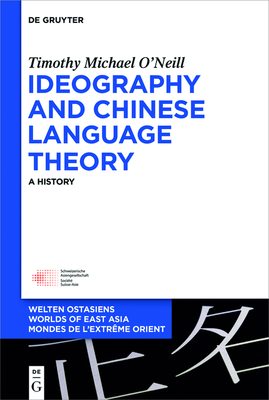
This book is a much-needed scholarly intervention and postcolonial corrective that examines why and when and how misunderstandings of Chinese writing came about and showcases the long history of Chinese theories of language. 'Ideography' as such assumes extra-linguistic, trans-historical, universal 'ideas' which are an outgrowth of Platonism and thus unique to European history. Classical Chinese discourse assumes that language (and writing) is an arbitrary artifact invented by sages for specific reasons at specific times in history. Language by this definition is an ever-changing technology amenable to historical manipulation; language is not the House of Being, but rather a historically embedded social construct that encodes quotidian human intentions and nothing more. These are incommensurate epistemes, each with its own cultural milieu and historical context. By comparing these two traditions, this study historicizes and decolonializes popular notions about Chinese characters, exposing the Eurocentrism inherent in all theories of ideography. Ideography and Chinese Language Theory will be of significant interest to historians, sinologists, theorists, and scholars in other branches of the humanities.
Log in to write a review for this book.
No reviews yet. Be the first to share your opinion.
Biography not available.