Cornelli, Gabriele Editor
Biography not available.

Browse all FOLKLORE books
Browse all GARDENS books
Browse all GRAPHIC NOVELS books
Browse all HISTORY - MEDIEVAL books
Browse all HUMOUR books
Browse all Juvenile Fiction : Biographical - Other books
Browse all Juvenile Fiction : Historical - Other books
Browse all Juvenile Fiction : Legends, Myths, & Fables - Other books
Browse all Juvenile Fiction : People & Places - Other books
Browse all Juvenile Fiction : People & Places - United States - Other books
Browse all Juvenile Fiction : Religious - Other books
Browse all Juvenile Nonfiction : History - Other books
Browse all Juvenile Nonfiction : Mathematics - Advanced books
Browse all Juvenile Nonfiction : People & Places - Other books
Browse all Juvenile Nonfiction : People & Places - United States - Othe books
Browse all LITERARY STUDIES books
Browse all LONDON books
Browse all Medical : Nursing - Mental Health books
Browse all MIND books
Browse all MUSEOLOGY books
Browse all NON-CLASSIFIABLE books
Browse all NONLINEAR SCIENCE books
Browse all POPULAR SCIENCE books
Browse all RELIGIOUS STUDIES books
Browse all SPIRIT books
Browse all SPORT books
Browse all TRAVEL WRITING books
 Out of Stock
Paperback · ISBN 9783110578171
Inclusive of GST and other taxes
Arriving at your doorstep in 10-15 days
Our logisitcs team will make sure everyitem is delivered safely
| ISBN | 9783110578171 |
|---|---|
| Publisher | De Gruyter |
| Publication date | November 2017 |
| Language | English |
| MRP | £23.50 GBP |
| Page count | 438 |
| Item weight | 135 g |
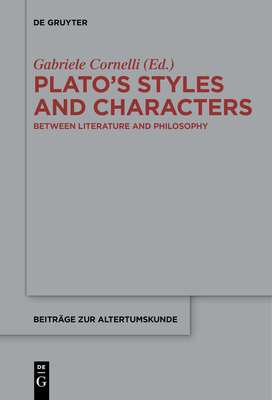
The significance of Plato's literary style to the content of his ideas is perhaps one of the central problems in the study of Plato and Ancient Philosophy as a whole. As Samuel Scolnicov points out in this collection, many other philosophers have employed literary techniques to express their ideas, just as many literary authors have exemplified philosophical ideas in their narratives, but for no other philosopher does the mode of expression play such a vital role in their thought as it does for Plato. And yet, even after two thousand years there is still no consensus about why Plato expresses his ideas in this distinctive style.
Selected from the first Latin American Area meeting of the International Plato Society (www.platosociety.org) in Brazil in 2012, the following collection of essays presents some of the most recent scholarship from around the world on the wide range of issues related to Plato's dialogue form. The essays can be divided into three categories. The first addresses general questions concerning Plato's literary style. The second concerns the relation of his style to other genres and traditions in Ancient Greece. And the third examines Plato's characters and his purpose in using them.
Log in to write a review for this book.
No reviews yet. Be the first to share your opinion.
Biography not available.