Fischer, Bob Author
Biography not available.

Browse all FOLKLORE books
Browse all GARDENS books
Browse all GRAPHIC NOVELS books
Browse all HISTORY - MEDIEVAL books
Browse all HUMOUR books
Browse all Juvenile Fiction : Biographical - Other books
Browse all Juvenile Fiction : Historical - Other books
Browse all Juvenile Fiction : Legends, Myths, & Fables - Other books
Browse all Juvenile Fiction : People & Places - Other books
Browse all Juvenile Fiction : People & Places - United States - Other books
Browse all Juvenile Fiction : Religious - Other books
Browse all Juvenile Nonfiction : History - Other books
Browse all Juvenile Nonfiction : Mathematics - Advanced books
Browse all Juvenile Nonfiction : People & Places - Other books
Browse all Juvenile Nonfiction : People & Places - United States - Othe books
Browse all LITERARY STUDIES books
Browse all LONDON books
Browse all Medical : Nursing - Mental Health books
Browse all MIND books
Browse all MUSEOLOGY books
Browse all NON-CLASSIFIABLE books
Browse all NONLINEAR SCIENCE books
Browse all POPULAR SCIENCE books
Browse all RELIGIOUS STUDIES books
Browse all SPIRIT books
Browse all SPORT books
Browse all TRAVEL WRITING books
 Out of Stock
Hardback · ISBN 9783319491264
Inclusive of GST and other taxes
Arriving at your doorstep in 10-15 days
Our logisitcs team will make sure everyitem is delivered safely
| ISBN | 9783319491264 |
|---|---|
| Publisher | Springer |
| Publication date | December 2016 |
| Language | English |
| MRP | £69.99 GBP |
| Page count | 148 |
| Item weight | 86 g |
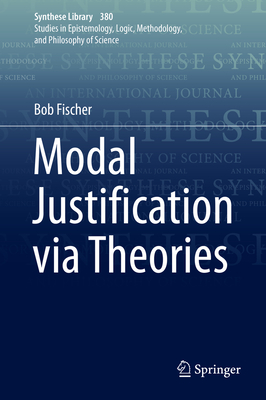
This monograph articulates and defends a theory-based epistemology of modality (TEM). According to TEM, someone justifiably believe an interesting modal claim if and only if (a) she justifiably believes a theory according to which that claim is true, (b) she believes that claim on the basis of that theory, and (c) she has no defeaters for her belief in that claim. The book has two parts. In the first, the author motivates TEM, sets out the view in detail, and defends it against a number of objections. In the second, the author considers whether TEM is worth accepting. To argue that it is, the author sets out criteria for choosing between modal epistemologies, concluding that TEM has a number of important virtues. However, the author also concedes that TEM is cautious: it probably implies that we are not justified in believing some interesting modal claims that we might take ourselves to be justified in believing. This raises a question about TEM's relationship to Peter van Inwagen's modal skepticism, which the author explores in detail. As it turns out, TEM offers a better route to modal skepticism than the one that van Inwagen provides. But rather than being a liability, the author argues that this is a further advantage of the view. Moreover, he argues that other popular modal epistemologies do not fare better: they cannot easily secure more extensive modal justification than TEM. The book concludes by clarifying TEM's relationship to the other modal epistemologies on offer, contending that TEM need not be a rival to those views, but can instead be a supplement to them.
Log in to write a review for this book.
No reviews yet. Be the first to share your opinion.
Biography not available.