Kalman, Calvin S. Author
Biography not available.

Browse all FOLKLORE books
Browse all GARDENS books
Browse all GRAPHIC NOVELS books
Browse all HISTORY - MEDIEVAL books
Browse all HUMOUR books
Browse all Juvenile Fiction : Biographical - Other books
Browse all Juvenile Fiction : Historical - Other books
Browse all Juvenile Fiction : Legends, Myths, & Fables - Other books
Browse all Juvenile Fiction : People & Places - Other books
Browse all Juvenile Fiction : People & Places - United States - Other books
Browse all Juvenile Fiction : Religious - Other books
Browse all Juvenile Nonfiction : History - Other books
Browse all Juvenile Nonfiction : Mathematics - Advanced books
Browse all Juvenile Nonfiction : People & Places - Other books
Browse all Juvenile Nonfiction : People & Places - United States - Othe books
Browse all LITERARY STUDIES books
Browse all LONDON books
Browse all Medical : Nursing - Mental Health books
Browse all MIND books
Browse all MUSEOLOGY books
Browse all NON-CLASSIFIABLE books
Browse all NONLINEAR SCIENCE books
Browse all POPULAR SCIENCE books
Browse all RELIGIOUS STUDIES books
Browse all SPIRIT books
Browse all SPORT books
Browse all TRAVEL WRITING books
 Out of Stock
Hardback · ISBN 9783319661391
Inclusive of GST and other taxes
Arriving at your doorstep in 10-15 days
Our logisitcs team will make sure everyitem is delivered safely
| ISBN | 9783319661391 |
|---|---|
| Publisher | Springer |
| Publication date | October 2017 |
| Language | English |
| MRP | £89.99 GBP |
| Page count | 292 |
| Item weight | 129 g |
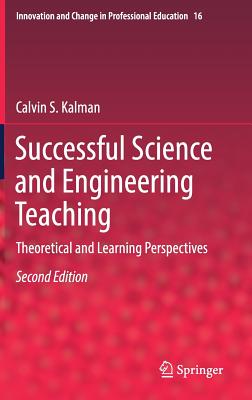
This second edition goes beyond the question of whether or not a pedagogical technique is effective, towards more of a focus on answering the question of why a particular technique or class of techniques is effective. In particular it is shown that students' epistemological beliefs could become more expert-like with a combination of appropriate instructional activities. The debate in the science education community between those who believe that students come in to the classroom with a theory about the subject which is different from that described by the teacher and their textbooks and those who feel that students' knowledge consists of isolated structures is elaborated especially in the light of the work by M.J. Lattery. Discussion of the stages in epistemic development in students beginning with the Perry model and continuing through later developments is now included. In this edition there is a discussion of how an instructor can enable the student to resolve cognitive dissonance in the difficulties students have in transcending their misconceptions. The second edition includes research comparing Peer Instruction with the Conceptual Conflict Collaborative Group Activity that had been described in the first edition. Much better instructions are available for students on how to use Reflective Writing including a rubric that simplifies the marking of Reflective Writing.
Log in to write a review for this book.
No reviews yet. Be the first to share your opinion.
Biography not available.