Kalin, Nadine M. Author
Biography not available.

Browse all FOLKLORE books
Browse all GARDENS books
Browse all GRAPHIC NOVELS books
Browse all HISTORY - MEDIEVAL books
Browse all HUMOUR books
Browse all Juvenile Fiction : Biographical - Other books
Browse all Juvenile Fiction : Historical - Other books
Browse all Juvenile Fiction : Legends, Myths, & Fables - Other books
Browse all Juvenile Fiction : People & Places - Other books
Browse all Juvenile Fiction : People & Places - United States - Other books
Browse all Juvenile Fiction : Religious - Other books
Browse all Juvenile Nonfiction : History - Other books
Browse all Juvenile Nonfiction : Mathematics - Advanced books
Browse all Juvenile Nonfiction : People & Places - Other books
Browse all Juvenile Nonfiction : People & Places - United States - Othe books
Browse all LITERARY STUDIES books
Browse all LONDON books
Browse all Medical : Nursing - Mental Health books
Browse all MIND books
Browse all MUSEOLOGY books
Browse all NON-CLASSIFIABLE books
Browse all NONLINEAR SCIENCE books
Browse all POPULAR SCIENCE books
Browse all RELIGIOUS STUDIES books
Browse all SPIRIT books
Browse all SPORT books
Browse all TRAVEL WRITING books
 Out of Stock
CHILDRENS PERSPECTIVES ON DRAW
Paperback · ISBN 9783639071832
Inclusive of GST and other taxes
Arriving at your doorstep in 10-15 days
Our logisitcs team will make sure everyitem is delivered safely
| ISBN | 9783639071832 |
|---|---|
| Subtitle | CHILDRENS PERSPECTIVES ON DRAW |
| Publisher | VDM Verlag Dr. Mueller e.K. |
| Publication date | August 2008 |
| Language | English |
| MRP | £48.97 GBP |
| Page count | 128 |
| Item weight | 40 g |
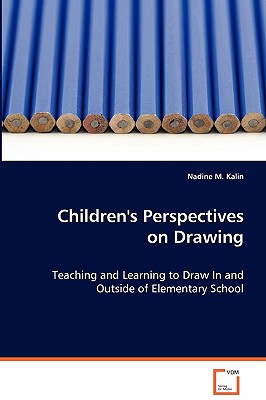
This book investigates children's preferred strategies for learning to draw. Twenty-six Grade 6 students engaged in three different drawing tasks (observation, feeling, and cartoon), and generated their favoured strategies for improving their drawing skills. Students then ranked their top three strategies for each drawing task. In addition, six students were interviewed about their drawing ex-periences and development, both inside and outside of school. Results indicated that the participants desired to improve their drawing skills through a variety of strategies that reflected their outside of school practices such as copying, tracing, getting ideas from others, drawing with others, and watching TV to get ideas. Help provided by the teacher and through interactions with others were also highly favored. The interview results further outlined parti-cipants' desires to improve, their perceptions of a lack of help for drawing at school, and the importance of significant others in their drawing development. Recommendations are suggested for class-room teachers to incorporate learners' ways of knowing, thinking, and representing in art education.
Log in to write a review for this book.
No reviews yet. Be the first to share your opinion.
Biography not available.