Keviczky, Tamas Author
Biography not available.

Browse all FOLKLORE books
Browse all GARDENS books
Browse all GRAPHIC NOVELS books
Browse all HISTORY - MEDIEVAL books
Browse all HUMOUR books
Browse all Juvenile Fiction : Biographical - Other books
Browse all Juvenile Fiction : Historical - Other books
Browse all Juvenile Fiction : Legends, Myths, & Fables - Other books
Browse all Juvenile Fiction : People & Places - Other books
Browse all Juvenile Fiction : People & Places - United States - Other books
Browse all Juvenile Fiction : Religious - Other books
Browse all Juvenile Nonfiction : History - Other books
Browse all Juvenile Nonfiction : Mathematics - Advanced books
Browse all Juvenile Nonfiction : People & Places - Other books
Browse all Juvenile Nonfiction : People & Places - United States - Othe books
Browse all LITERARY STUDIES books
Browse all LONDON books
Browse all Medical : Nursing - Mental Health books
Browse all MIND books
Browse all MUSEOLOGY books
Browse all NON-CLASSIFIABLE books
Browse all NONLINEAR SCIENCE books
Browse all POPULAR SCIENCE books
Browse all RELIGIOUS STUDIES books
Browse all SPIRIT books
Browse all SPORT books
Browse all TRAVEL WRITING books
 Out of Stock
Paperback · ISBN 9783639131413
Inclusive of GST and other taxes
Arriving at your doorstep in 10-15 days
Our logisitcs team will make sure everyitem is delivered safely
| ISBN | 9783639131413 |
|---|---|
| Publisher | VDM Verlag |
| Publication date | March 2009 |
| Language | English |
| MRP | £48.97 GBP |
| Page count | 156 |
| Item weight | 53 g |
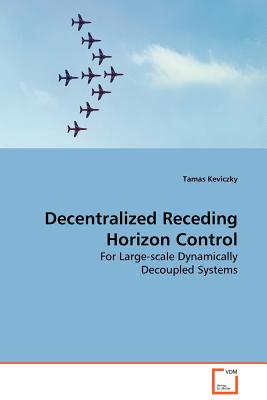
Large networks of interconnected, independently actuated systems can be found these days in a broad spectrum of applications ranging from robotics and formation flight to civil engineering. The abundance and importance of these systems will continue to grow along with the necessity of avoiding centralized control design when it becomes computationally prohibitive or requires unrealistic expectations regarding information exchange. This book proposes a decentralized optimal control framework using distributed Receding Horizon Control (RHC) schemes to address this problem, which helps overcome drawbacks of currently available methods. Stability of the proposed scheme is analyzed in detail and a number of methodologies are presented to address the problem of feasibility. The technique is illustrated by developing distributed formation control laws for cooperative Unmanned Air Vehicles (UAVs). The presented tools and analysis should be especially useful for systems and controls engineers/researchers studying constrained optimal control using localized information, or anyone else who may be interested in working with large-scale systems and autonomous vehicle-teams.
Log in to write a review for this book.
No reviews yet. Be the first to share your opinion.
Biography not available.