Lüttge, Ulrich Editor
Biography not available.

Browse all FOLKLORE books
Browse all GARDENS books
Browse all GRAPHIC NOVELS books
Browse all HISTORY - MEDIEVAL books
Browse all HUMOUR books
Browse all Juvenile Fiction : Biographical - Other books
Browse all Juvenile Fiction : Historical - Other books
Browse all Juvenile Fiction : Legends, Myths, & Fables - Other books
Browse all Juvenile Fiction : People & Places - Other books
Browse all Juvenile Fiction : People & Places - United States - Other books
Browse all Juvenile Fiction : Religious - Other books
Browse all Juvenile Nonfiction : History - Other books
Browse all Juvenile Nonfiction : Mathematics - Advanced books
Browse all Juvenile Nonfiction : People & Places - Other books
Browse all Juvenile Nonfiction : People & Places - United States - Othe books
Browse all LITERARY STUDIES books
Browse all LONDON books
Browse all Medical : Nursing - Mental Health books
Browse all MIND books
Browse all MUSEOLOGY books
Browse all NON-CLASSIFIABLE books
Browse all NONLINEAR SCIENCE books
Browse all POPULAR SCIENCE books
Browse all RELIGIOUS STUDIES books
Browse all SPIRIT books
Browse all SPORT books
Browse all TRAVEL WRITING books
 Out of Stock
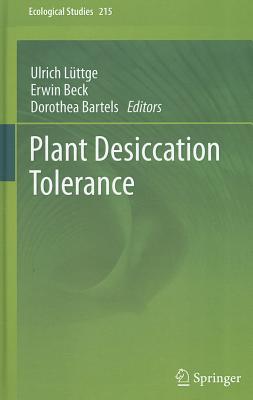
PLANT DESICCATION TOLERANCE
Hardback · ISBN 9783642191053
Inclusive of GST and other taxes
Arriving at your doorstep in 10-15 days
Our logisitcs team will make sure everyitem is delivered safely
| ISBN | 9783642191053 |
|---|---|
| Subtitle | PLANT DESICCATION TOLERANCE |
| Publisher | Springer |
| Publication date | June 2011 |
| Language | English |
| MRP | £199.99 GBP |
| Page count | 406 |
| Item weight | 164 g |
Desiccation tolerance was essential when plants first began to conquer land, roughly 400 million years ago. While most desiccation-tolerant plants belong to basal phylogenetic taxa, this capacity has also evolved among some vascular plant species.
In this volume renowned experts treat plant desiccation tolerance at the organismic as well as at the cellular level. The diversity of ecophysiological adaptations and acclimations of cyanobacteria, eukaryotic algae, mosses, and lichens is addressed in several chapters. The particular problems of vascular plants during dehydration/rehydration cycles resulting not only from their hydraulic architectures, but also from severe secondary stresses associated with the desiccated state are discussed. Based on the treatment of desiccation tolerance at the organismic level, a second section of the book is devoted to the cell biological level. It delineates the general concepts of functional genomics, epigenetics, genetics, molecular biology and the sensing and signalling networks of systems biology involved in dehydration/rehydration cycles.
This book provides an invaluable compilation of current knowledge, which is a prerequisite for a better understanding of plant desiccation tolerance in natural as well as agro- and forest ecosystems where water is one of the most essential resources.
Log in to write a review for this book.
No reviews yet. Be the first to share your opinion.
Biography not available.
Biography not available.
Biography not available.