Salvo, Pietro Author
Biography not available.

Browse all FOLKLORE books
Browse all GARDENS books
Browse all GRAPHIC NOVELS books
Browse all HISTORY - MEDIEVAL books
Browse all HUMOUR books
Browse all Juvenile Fiction : Biographical - Other books
Browse all Juvenile Fiction : Historical - Other books
Browse all Juvenile Fiction : Legends, Myths, & Fables - Other books
Browse all Juvenile Fiction : People & Places - Other books
Browse all Juvenile Fiction : People & Places - United States - Other books
Browse all Juvenile Fiction : Religious - Other books
Browse all Juvenile Nonfiction : History - Other books
Browse all Juvenile Nonfiction : Mathematics - Advanced books
Browse all Juvenile Nonfiction : People & Places - Other books
Browse all Juvenile Nonfiction : People & Places - United States - Othe books
Browse all LITERARY STUDIES books
Browse all LONDON books
Browse all Medical : Nursing - Mental Health books
Browse all MIND books
Browse all MUSEOLOGY books
Browse all NON-CLASSIFIABLE books
Browse all NONLINEAR SCIENCE books
Browse all POPULAR SCIENCE books
Browse all RELIGIOUS STUDIES books
Browse all SPIRIT books
Browse all SPORT books
Browse all TRAVEL WRITING books
 Out of Stock
Hardback · ISBN 9783725837670
Inclusive of GST and other taxes
Arriving at your doorstep in 10-15 days
Our logisitcs team will make sure everyitem is delivered safely
| ISBN | 9783725837670 |
|---|---|
| Publisher | MDPI AG |
| Publication date | May 2025 |
| Language | English |
| MRP | £84.68 GBP |
| Page count | 312 |
| Item weight | 197 g |
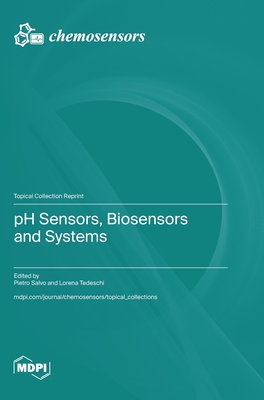
This Topical Collection Reprint has gathered the latest findings in sensors, biosensors, and technologies, with a special attention systems where the pH plays a prominent role. The pH value is crucial for many living systems and chemical reactions in nature. Biology and microbiology (e.g., monitoring of bacteria, DNA, enzymes, aminoacids, and cells), environmental protection (e.g., characterization of waste and sea water), food and beverage quality control (e.g., monitoring of fermentation processes and the characterization of fruit, drinking water, and vegetables), pharmaceutics, cosmetics (quality control of creams, gels, and shampoos), medicine (e.g., monitoring and analysis of culture media, cancer, blood, and cytoplasm), and industry (e.g., chemical baths for paints and plating) are some of the fields where pH sensors have been extensively used to understand the nature of chemical processes, as well as to monitor quality and control safety. Although paper test strips and glass electrodes are the most common pH sensors, many studies have focused on developing less fragile, miniaturized, and biocompatible sensors with higher sensitivity. The pH value can be measured through various approaches and materials, including electrochemical and optical sensors, ion-selective field effect transistors (ISFETs), quantum dots, 2D materials, and organic compounds.
Log in to write a review for this book.
No reviews yet. Be the first to share your opinion.
Biography not available.
Biography not available.