Shaw, Rajib Editor
Biography not available.

Browse all FOLKLORE books
Browse all GARDENS books
Browse all GRAPHIC NOVELS books
Browse all HISTORY - MEDIEVAL books
Browse all HUMOUR books
Browse all Juvenile Fiction : Biographical - Other books
Browse all Juvenile Fiction : Historical - Other books
Browse all Juvenile Fiction : Legends, Myths, & Fables - Other books
Browse all Juvenile Fiction : People & Places - Other books
Browse all Juvenile Fiction : People & Places - United States - Other books
Browse all Juvenile Fiction : Religious - Other books
Browse all Juvenile Nonfiction : History - Other books
Browse all Juvenile Nonfiction : Mathematics - Advanced books
Browse all Juvenile Nonfiction : People & Places - Other books
Browse all Juvenile Nonfiction : People & Places - United States - Othe books
Browse all LITERARY STUDIES books
Browse all LONDON books
Browse all Medical : Nursing - Mental Health books
Browse all MIND books
Browse all MUSEOLOGY books
Browse all NON-CLASSIFIABLE books
Browse all NONLINEAR SCIENCE books
Browse all POPULAR SCIENCE books
Browse all RELIGIOUS STUDIES books
Browse all SPIRIT books
Browse all SPORT books
Browse all TRAVEL WRITING books
 Out of Stock
TOHOKU RECOVERY 2015/E
Hardback · ISBN 9784431551355
Inclusive of GST and other taxes
Arriving at your doorstep in 10-15 days
Our logisitcs team will make sure everyitem is delivered safely
| ISBN | 9784431551355 |
|---|---|
| Subtitle | TOHOKU RECOVERY 2015/E |
| Publisher | Springer |
| Publication date | November 2014 |
| Language | English |
| MRP | £89.99 GBP |
| Page count | 208 |
| Item weight | 104 g |
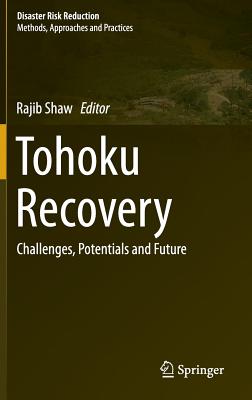
The March 11 disaster in 2011, known as the Great East Japan Earthquake and Tsunami, caused extensive damage in various sectors. Through the recovery process, special lessons are being learned and applied in the affected region. This book attempts to draw lessons from different issues and sectors such as policy perspectives (both national and local), the role of international NGOs, fishing industries and other livelihoods, temporary housing, health, heritage, and lesson sharing. The book outlines the need and approach for sharing the lessons with wider communities in developing those lessons. Based on intensive field research, the book also provides some key lessons from community-based recovery in the affected regions of Iwate, Miyagi, and Fukushima prefectures.
This book has 13 chapters in two parts. The first part of the book, with seven chapters, provides a set of lessons from diverse sectors. The second part, with six chapters, provides case studies from different areas of Tohoku. Six specific issues are addressed in part 1: the role of international agencies, livelihood (namely, fisheries) recovery, temporary housing, health, heritage, and lesson sharing. Part 2 has six case studies from different areas of the Tohoku region, including Fukushima.
The primary target groups for this book are students and researchers in the fields of environment, disaster risk reduction, and recovery studies. The book provides them with a good idea of the current research trends in the field and furnishes basic knowledge about these vital topics. Another target group comprises practitioners and policy makers, who will be able to apply the knowledge collected here to policy and decision-making.
Log in to write a review for this book.
No reviews yet. Be the first to share your opinion.
Biography not available.