SHAKIR, CHIPPU Author
Biography not available.

Browse all FOLKLORE books
Browse all GARDENS books
Browse all GRAPHIC NOVELS books
Browse all HISTORY - MEDIEVAL books
Browse all HUMOUR books
Browse all Juvenile Fiction : Biographical - Other books
Browse all Juvenile Fiction : Historical - Other books
Browse all Juvenile Fiction : Legends, Myths, & Fables - Other books
Browse all Juvenile Fiction : People & Places - Other books
Browse all Juvenile Fiction : People & Places - United States - Other books
Browse all Juvenile Fiction : Religious - Other books
Browse all Juvenile Nonfiction : History - Other books
Browse all Juvenile Nonfiction : Mathematics - Advanced books
Browse all Juvenile Nonfiction : People & Places - Other books
Browse all Juvenile Nonfiction : People & Places - United States - Othe books
Browse all LITERARY STUDIES books
Browse all LONDON books
Browse all Medical : Nursing - Mental Health books
Browse all MIND books
Browse all MUSEOLOGY books
Browse all NON-CLASSIFIABLE books
Browse all NONLINEAR SCIENCE books
Browse all POPULAR SCIENCE books
Browse all RELIGIOUS STUDIES books
Browse all SPIRIT books
Browse all SPORT books
Browse all TRAVEL WRITING books
 Out of Stock
Paperback · ISBN 9786205487594
Inclusive of GST and other taxes
Arriving at your doorstep in 10-15 days
Our logisitcs team will make sure everyitem is delivered safely
| ISBN | 9786205487594 |
|---|---|
| Publisher | LAP Lambert Academic Publishing |
| Publication date | December 2024 |
| Language | English |
| MRP | £71.00 GBP |
| Page count | 208 |
| Item weight | 69 g |
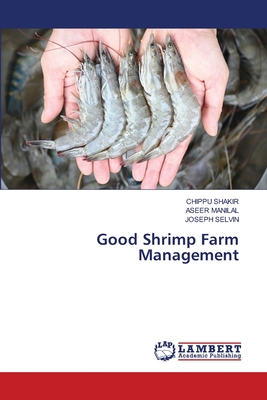
This book encompasses totally, five chapters, first one deals with the analysis of the information gathered during the survey from existing documentation, reports, and conversations with different shrimp farmers, leading to the conclusion that the study area has all of the essential resources necessary to produce large quantities of shrimp. In the next Chapter, the effect of two commercially available shrimp feeds on the growth and survival rate of the shrimps was investigated. Chapter three demonstrates the comparative analysis of low (6 shrimp m-2) and high-density (12 shrimp m-2) shrimp farming. The results showed that shrimp cultures under low-density farming conditions exhibited higher survival and growth rates. Chapter 4 narrates the effect of three commercial probiotics on the physiochemical parameters, growth and survival rate of the shrimp. The results showed that the growth and survival rate of probiotic-treated shrimps was higher. In Chapter 5, constraints and solutions for shrimp farming on the Kollam coast were investigated.
Log in to write a review for this book.
No reviews yet. Be the first to share your opinion.
Biography not available.
Biography not available.
Biography not available.